
ASP.NET Core Web API and Minimal API Development with .NET 6
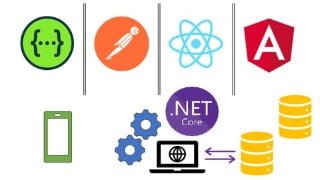

Learn ASP.NET Core Web API development with authentication, authorization, and security features. Build projects using controllers and Minimal API in .NET 6. Implement CRUD operations and share data across platforms. Perfect for .NET developers familiar with MVC architecture.
What you’ll learn
- Web API Development using Controllers with .NET 6
- Developing model class with validations
- Implementing Data Access Layer/Logic using Entity Framework Core
- Developing Generic Synchronous Repository Pattern to implement CRUD operations
- Authentication using Custom Credentials
- JWT Authentication and Authorization
- Role Based Authorization – Grant and Revoke permissions
- Working with DTO [Data Transfer Object] and AutoMapper [What, Why and How]
- Testing Web API using Postman
- Testing Web API using Angular application
- Testing Web API using React JS application
- Developing Generic Asynchronous Repository Pattern to implement CRUD operations
- Understanding Minimal API in .NET 6
- Performing CURD operations in Minimal API using Asynchronous Repository Pattern along with D.I.
- Introduction to Auth0 Security
- Working with Auth0 Dashboard – Generate Access Token
- Securing Minimal API Endpoints using Auth0
- Extra Material access information
Show moreShow less
Sharing data with authentication and authorization across number of platforms and devices is a challenging job. Being a developer, in an organization, we build solutions using different technologies, libraries, frameworks etc. To share the data with all these platforms and devices, we can think of ASP.NET Core Web API along with authentication, authorization and many more features which we can use during the development of our applications.
In this course, we will learn ASP.NET Core Web API development by building a project with controller based API and Minimal API which is introduced in .NET 6. We will also see how to secure Minimal API using Auth0 security with Access Token. Also, let’s see how to use DTOs [Data Transfer Object] and Auto Mapper in our application. This will be a complete hands-on course where we will develop our API with different examples. During the ASP.NET Core Web API development, we will use –
Model Classes
Entity Framework Core – Code First Approach
Data Access Layer/Logic
ASP.NET Web API [Controller and Minimal API]
Dependency Injection
JsonWebToken [JWT]
Auth0
Etc.
We will use Microsoft Visual Studio 2022 and Microsoft SQL Server. Along with that we will test our Web API endpoints using –
Swagger UI
Postman
Angular Application
React JS application
Who this course is for:
- .NET Developers who have knowledge of ASP .NET MVC architecture pattern
- Developers who want to learn Web API development
- Developers who want to share the data across multiple platforms with security like authentication and authorization [JWT/Auth0/Role Based Authorization]
- Developers who want to understand Minimal API in .NET 6
- Developers who want to implement CRUD operations using controller based and/or microservices along with authentication and authorization
User Reviews
Be the first to review “ASP.NET Core Web API and Minimal API Development with .NET 6”
You must be logged in to post a review.




There are no reviews yet.