
Cluster Analysis : Unsupervised Machine Learning in Python
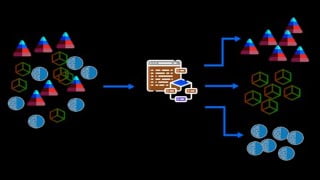

Learn how to implement various clustering models like K-Means, Hierarchical, Mean Shift, DBSCAN, OPTICS, and Spectral Clustering in Python. Discover the optimal number of clusters and evaluate performance using metrics like Silhouette Score, Calinski-Harabasz Index, and Davies-Bouldin Index. Ideal for beginners and industry professionals interested in machine learning and data science. Boost your career with the high-demand field of machine learning engineering.
What you’ll learn
- Describe the input and output of a clustering model
- Prepare data with feature engineering techniques
- Implement K-Means Clustering, Hierarchical Clustering, Mean Shift Clustering, DBSCAN, OPTICS and Spectral Clustering models
- Determine the optimal number of clusters
- Use a variety of performance metrics such as Silhouette Score, Calinski-Harabasz Index and Davies-Bouldin Index.
Artificial intelligence and machine learning are touching our everyday lives in more-and-more ways. There’s an endless supply of industries and applications that machine learning can make more efficient and intelligent. You have probably come across Google News, which automatically groups similar news articles under a topic. Have you ever wondered what process runs in the background to arrive at these groups? Unsupervised machine learning is the underlying method behind a large part of this. Unsupervised machine learning algorithms analyze and cluster unlabeled datasets. These algorithms discover hidden patterns or data groupings without human intervention. This course introduces you to one of the prominent modelling families of Unsupervised Machine Learning called Clustering. This course provides the learners with the foundational knowledge to use Clustering models to create insights. You will become familiar with the most successful and widely used Clustering techniques, such as:
K-Means Clustering
Hierarchical Clustering
Mean Shift Clustering
DBSCAN : Density-Based Spatial Clustering of Applications with Noise
OPTICS : Ordering points to identify the clustering structure
Spectral Clustering
You will learn how to train clustering models to cluster and use performance metrics to compare different models. By the end of this course, you will be able to build machine learning models to make clusters using your data. The complete Python programs and datasets included in the class are also available for download. This course is designed most straightforwardly to utilize your time wisely. Get ready to do more learning than your machine!
Happy Learning.
Career Growth:
Employment website Indeed has listed machine learning engineers as #1 among The Best Jobs in the U.S., citing a 344% growth rate and a median salary of $146,085 per year. Overall, computer and information technology jobs are booming, with employment projected to grow 11% from 2019 to 2029.
Who this course is for:
- Beginners starting out to the field of Machine Learning.
- Industry professionals and aspiring data scientists.
- People who want to know how to write their clustering code.
User Reviews
Be the first to review “Cluster Analysis : Unsupervised Machine Learning in Python”
You must be logged in to post a review.




There are no reviews yet.