
AWS – Certified Welding Inspector- Part-1, SMAW/PAW/GTAW
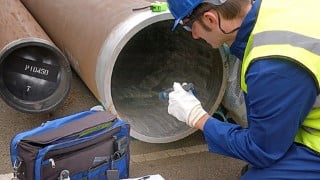

Prepare for the American Welding Society – Certified Welding Inspector Examination and gain comprehensive knowledge of welding processes, inspection procedures, and safety practices. This course is ideal for individuals with a background in mechanical or welding engineering, as well as those with teaching experience.
What you’ll learn
- Students learn and prepare for the American Welding Society – Certified Welding Inspector Examination
- Students learn the skills of Certified Welding Inspector of American Welding society
- Students learn about the Plasma Welding process, like what type of welding process is this?
- Students learn the welding fundamentals of PAW process and cutting process. How the arc is generated in PAW process?
- Learn about the PAW Machine and it’s circuit diagram. PAW machine and equipment. Power supply. PAW Torch and assembly. PAW process diagram. torch cooling .
- Students learn about Plasma Torch. Different problems with Plasma torch. Torch coolant. Plasma welding process Modes of operation.
- Students learn about Non-transfer arc mode and Transfer arc mode. Keyhole mode. Effects of various factors on Weld Quality
- Learn about different 6 types of Tungstem Electrodes and color coding, used in the Industry
- Learn about Tungsten electrode Vertex angles and their uses and benefits
- Students learn about GTAW /TIG welding process. TIG welding machinery and equipment. What is Autogenous welding? Orbitrat GTA welding process.
- Students learn about TIG Welding Machines and Equipment High Frequency Arc Stabilizers. Power source for TIG welding process. TIG welding Torch and asembly.
- Students learn about how the TIG welding process works. Filler Rod Angle for TIG Process. Welding positions. Gas flow setup. Back purging in the pipe welding.
- Students learn about the welding joint failures and the cause of failure. Sugaring / granulation / contamination. Operation Variables. TIG Welding Filler rods
- Filler rods identification. Different types of welding rods. Steel filler rods, SS filler rods, Alluminum filler rods, chrom/ molibdynum/titaniuim filler rods,
- Students learn about general Guide lines for selection of filler rod dia.
- Students learn about SMAW welding principles and welding process. different names for SMAW process. SMAW machines and equipment.
- Students leanr abouDifferent types of AC, DC rectifiers and Generators (AC/DC for SMA Welding). Welding machinery and equipment. Power source required for SMAW.
- Students learn about the purpose of OCV. Druping charecteristics of constant current. What will do the Long arc and short arc.
- Students learn the Welding Position Numbers for Different Weld Positions and type of welding. Sequence of welding beads in different welding positions.
- Students learn about welding electrodes and chemical coatings. Classification of electrodes and numbers.
- Students learn about Coating, Current and Polarity Designated By the Fourth Digit
Show moreShow less
The CWI exam consists of three parts
Part A – Fundamentals
Part B – Practical,
Part C – Code Book Applications.
Part A is a closed-book exam that consists of 150 questions on the welding fundamentals, terms and definitions, welding processes, nondestructive examination, procedures, symbols, calculations, safety practices, and duties and responsibilities of a CWI.
Part B is a practical hands-on test to find the ability to visually identify welding discontinuities and to determine the acceptance or rejection of a weld.
Part C is an open book test of Code application to evaluate the applicant’s familiarity and ability with a selected code application.
The pass marks for Part- A, B & C is 72%
You can refer to the full details of AWS Certification and Qualification Standards in the following documents available at free of cost on the AWS website:
QC1:2016-AMD1 – Specification for AWS Certification of Welding Inspectors
B5.1:2013-AMD1 – Specification for the Qualification of Welding Inspectors
(Study the documents and be prepared well to answer any question from the document.)
In this course the candidate will learn the following :
Preparation of reports
Complete knowledge and understanding of the following welding processes:
SAW – PAW – RW – SMAW – SW- FCAW- GTAW -OFW- ESW- GMAW.
Thermal Spraying Soldering
Mechanical Cutting Thermal Cutting/Gouging
Brazing/Braze Welding
The fundamental principles of the following ND Tests:
VT, MT, UT, PT, RT, LT
He will acquire knowledge of quality procedures Quality audits/surveillance.
Knowledge and understanding of the fundamentals of welding metallurgy
Knowledge and understanding of all the welding symbols and engineering drawings.
Base material compliance
Filler metal compliance
Filler metal storage, handling
Inspection records compliance
Verification of proper documentation compliance
Base material and filler metal compatibility
Certification of documented results and compliance
Procedure qualification records compliance
Welding procedure compliance
NDE procedures compliance
Applicable safety requirements in the workplace as per the International Standards
Who this course is for:
- Degree or Diploma or Trade Certificate in Mechanical or Welding Engineering, with 2 to 3 years of Industrial experience in Welding or Engineering. Teaching experience will also be considered.
User Reviews
Be the first to review “AWS – Certified Welding Inspector- Part-1, SMAW/PAW/GTAW”
You must be logged in to post a review.





There are no reviews yet.