
Most Complete Teaching of OSPF by Arash Deljoo

Learn OSPF, the routing protocol for IP networks, with this comprehensive course. From basic configuration to troubleshooting, master OSPF fundamentals and gain valuable skills for network engineers. IPv4 and IPv6 networks are covered, making this course suitable for all levels. Boost your knowledge and enhance your career with the most complete teaching of OSPF.
What you’ll learn
- Most Complete Teaching of OSPF
- OSPF Basic Configuration and Verification
- OSPF Single Area – Traditional Configuration
- OSPF Single Area – Explicit Configuration
- OSPF Single Area with Multi Access Network
- OSPF Static Neighborship
- OSPF Dynamic Neighborship
- OSPF Packets and States and Static Neighborship
- OSPF Finite State Machine [FSM]
- OSPF DR and BDR
- OSPF LSA TYPE-1 ( Router LSA )
- OSPF LSA TYPE-2 ( Network LSA )
- OSPF LSA TYPE-3 ( Summary LSA )
- OSPF LSA TYPE-5 ( External LSA )
- OSPF LSA TYPE-4 ( ASBR-Summary )
- OSPF LSA Types Example
- OSPF Determining the Next Hop
- OSPF Special Rule
- OSPF Default Route Advertisement
- OSPF Area Types
- OSPF Cost and Path Selection Rules
- OSPF Summarization
- OSPF Virtual Links
- OSPF Network Types
- OSPF Neighbor Adjacencies Troubleshooting
- OSPF Routes Troubleshooting
- OSPF Miscellaneous Issues and Trouble Tickets
- OSPFv3 Fundamentals and Basic Configuration
- OSPFv3 LSA Types
- OSPFv3 Instance-ID
- OSPFv3 Authentication and Encryption
- OSPFv3 Classic Configuration and Trouble Tickets
- OSPFv3 Address Family Configuration and Trouble Tickets
Show moreShow less
The Most Complete Teaching of OSPF include :
– OSPF Fundamentals
– OSPF Basic Configuration and Verification
– OSPF Single Area – Traditional Configuration [1]
– OSPF Single Area – Traditional Configuration [2]
– OSPF Single Area – Explicit Configuration
– OSPF Single Area with Multi Access Network
– OSPF Static Neighborship
– OSPF Dynamic Neighborship (A)
– OSPF Packets and States and Static Neighborship
– OSPF Finite State Machine [FSM]
– OSPF DR and BDR
– OSPF LSA TYPE-1 ( Router LSA )
– OSPF LSA TYPE-2 ( Network LSA )
– OSPF LSA TYPE-3 ( Summary LSA )
– OSPF LSA TYPE-5 ( External LSA )
– OSPF LSA TYPE-4 ( ASBR-Summary )
– OSPF LSA Types Example
– OSPF Determining the Next Hop
– OSPF Special Rule
– OSPF Default Route Advertisement
– OSPF Area Types
– OSPF Cost and Path Selection Rules
– OSPF Summarization
– OSPF Virtual Links
– OSPF Network Types
– OSPF Neighbor Adjacencies Troubleshooting
– OSPF Routes Troubleshooting
– OSPF Miscellaneous Issues and Trouble Tickets
– OSPFv3 Fundamentals and Basic Configuration
– OSPFv3 LSA Types
– OSPFv3 Instance-ID
– OSPFv3 Authentication and Encryption
– OSPFv3 Classic Configuration and Trouble Tickets
– OSPFv3 Address Family Configuration and Trouble Tickets
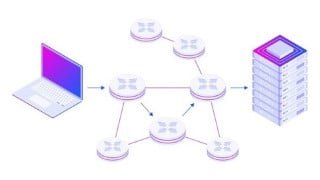
Open Shortest Path First is a routing protocol for Internet Protocol networks. It uses a link state routing algorithm and falls into the group of interior gateway protocols, operating within a single autonomous system.
OSPF gathers link state information from available routers and constructs a topology map of the network. The topology is presented as a routing table to the Internet Layer for routing packets by their destination IP address. OSPF supports Internet Protocol Version 4 (IPv4) and Internet Protocol Version 6 (IPv6) networks and supports the Classless Inter-Domain Routing (CIDR) addressing model.
Who this course is for:
- Network Engineers
User Reviews
Be the first to review “Most Complete Teaching of OSPF by Arash Deljoo”
You must be logged in to post a review.




There are no reviews yet.