
Most Complete Teaching of vPC by Arash Deljoo
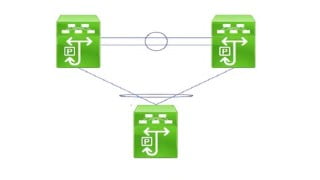

Learn about vPC (Virtual Port-Channel), a feature on Cisco Nexus switches that allows configuration of a Port-Channel across multiple switches. This course is ideal for network engineers looking to understand vPC components, configuration, and deployment scenarios. Improve your networking skills today!
What you’ll learn
- vPC – virtual Port Channel Introduction
- vPC – virtual Port Channel Components
- vPC – virtual Port Channel Configuration
- vPC – virtual Port Channel Device Role
- vPC – virtual Port Channel Data-Plane Loop Avoidance
- vPC – virtual Port Channel Deployment Scenarios
- vPC – Double-Sided virtual Port Channel
- vPC – Best Practices for Building a vPC Domain
- vPC – Cisco Fabric Services (CFS) Protocol
- vPC – Peer Keepalive Link
- vPC – Peer Link
- vPC – Object Tracking
- vPC – Member Port
Show moreShow less
vPC (Virtual Port-Channel), also known as multichassis EtherChannel (MEC) is a feature on the Cisco Nexus switches that provides the ability to configure a Port-Channel across multiple switches (i.e. vPC peers).
vPC is similar to Virtual Switch System (VSS) on the Catalyst 6500s. However, the key difference between vPC and VSS is that VSS creates a single logical switch. This results in a single control plane for both management and configuration purposes. Whereas with vPC each switch is managed and configured independently.
It is important to remember that with vPC both switches are managed independently. This means you will need to create and permit your VLANs on both Nexus switches
Let’s look at each of the vPC components,
vPC Domain – Includes the vPC Peers, KeepAlive Links and the Port-Channels that use the vPC technology.
vPC Peer Switch – The other switch within the vPC domain. Each switch is connected via the vPC peer link. It’s also worth noting that one device is selected as primary and the other secondary.
vPC Member Port – Ports included within the vPCs.
vPC Peer-Keepalive Link – Connects both vPC peer switches and carries monitoring traffic to/from each peer switch. Monitoring is performed to ensure the switches are both operational and running vPC.
vPC Peer Link – Connects both vPC peer switches and carries BPDUs, HSRPs, and MAC addresses to its vPC peer. In the event of vPC member port failure, it also carries unicast traffic to the peer switch.
Orphan Port – An orphan port is a port that is configured with a vPC VLAN (i.e a VLAN that is carried over the vPC peer link) and is not configured as a vPC member port
Who this course is for:
- Network Engineers
User Reviews
Be the first to review “Most Complete Teaching of vPC by Arash Deljoo”
You must be logged in to post a review.





There are no reviews yet.