
Magic Java: Networking with Java Sockets
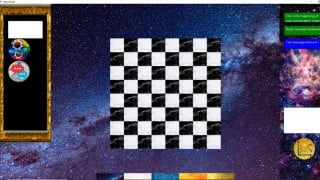

Learn how to use Java sockets for high-performance server-client architecture in Java and JavaFX applications. Gain practical knowledge of multithreading, JSON, and GSON for efficient data transfer. Visualize networking code in a JavaFX environment and compile applications using Maven. Perfect for intermediate Java developers and game developers looking to enhance their networking capabilities. Get access to a versatile skeleton application for building rich networked applications without writing all the code yourself. Join us and learn the Magic Java way!
What you’ll learn
- Students will learn how to use Java sockets to create high performance server-client architecture for Java and JavaFX based applications.
- Students will review practical applications of multithreading as it relates to server and client architecture.
- Students will learn about the JSON (JavaScript Object Notation) and GSON for sending data in a useful string format across the internet.
- Students will observe networking code in a highly visual JavaFX environment allowing them to understand all of the stages of the networking process.
- Students will gain some exposure to JavaFX development.
- Students will learn how to compile their JavaFX networked application to a one-click-run JAR file using Maven.
Welcome to Magic Java: Networking with Java Sockets! I have developed this course for a simple reason: in my hobby as an enthusiast game developer, I developed a specialization in Java sockets for high-performance networking, and I want to share the skeleton of my networked architecture with others. I want to make it as easy as possible for other people to understand and utilize the under-appreciated Java sockets classes for making networking applications. I strive to make this easy through one primary method: Visualization! In this application, you will not be working with the command line, you will instead be dissecting a fully-functional, highly-visual, networked chat application. We do this through our exploration of a project built on JavaFX, this is learning the Magic Java way, the fun way, the way where you see what is happening under the hood. I don’t want you staring at lines of code wondering how the text is output, I want you to be constantly relating it to the structure of the program, to the individual visual components that make up the application. And to that end, although we do not cover every little line of code of JavaFX (another JavaFX Udemy will come, eventually), we instead review the core of the JavaFX “nodes” or components that give the application its graphical appearance. I’ve developed this course to be fast and efficient, with the combination of reviewing the code, the architecture, and the threading model, and my comments in the code to all work together to quickly build up your understanding of the topic. In purchasing this Udemy, you are also gaining access to a versatile skeleton application with networking code that you can copy, paste and adapt to your purposes to make a rich networked application. As always, thank you for your time, and I hope you choose to learn the Magic Java way!
Who this course is for:
- Intermediate or higher Java developers who wish to utilize networking features in their application or game.
- Java game developers who want a simple architecture for sending game state information across the internet.
- Developers who want a core, ready-to-build-upon project for networking without having to write all of the server-client code themselves.
User Reviews
Be the first to review “Magic Java: Networking with Java Sockets”
You must be logged in to post a review.





There are no reviews yet.