
Introduction to Counselling & Psychotheraphy
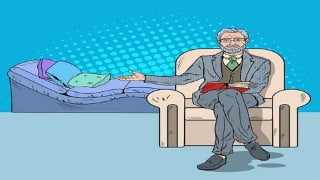

Discover the benefits of psychotherapy and counseling for individuals, couples, families, and groups. Improve mental health, relationships, and problem-solving skills. Suitable for medical professionals, HR departments, working professionals, psychologists, and students.
What you’ll learn
- Introduction to Counselling & Psychotheraphy
- Explain Why Psychotherapy
- Explain Who Can Seek Psychotherapy/Counselling
- Explain Strategies of Psychotherapy
‘Psychotherapy’ is an interpersonal, relational intervention by trained counsellors, therapists, psychotherapists to help in life problems including personal as well as professional fronts and all walks of life. It can be conducted with an individual, a couple, a family, or a group of unrelated members who share common problems. Some psychotherapies focus on understanding impact of past experiences and upbringing on present behavior, conscious mind as well as unconscious mind, others focus on changing current behavior patterns while others focus on overcoming shortcomings and solving problems.
The primary purpose of any psychotherapy session is to increase a sense of well-being and reduce discomfort, ensure open communication for the patient, improve behavior, and improve the mental health of the patient. •It can help an individual to set more realistic goals, to improve their relationships, to find better and unique ways to solve their problems, and identify the unconscious thoughts and mindsets that adversely affect their life. All human predicaments are a result of complex interplay between factual situational factors and subjective subconscious-level cognitions, perceptions, beliefs, distorted thinking that are based on the individual’s past experiences and upbringing.
As per the Psychodynamic approach, human behavior is an outcome of the role played by various psychological forces and early childhood experiences. The theory lays a lot of stress on the dynamics of relationship between the unconscious or conscious mind and also asserts that behavior is an outcome of internal conflicts regarding which people have least awareness. The theory was propounded by a medical student Sigmund Freud in the year 1874. He expanded the concept of Psychoanalysis in which he suggested that psychological processes occur as a result of the flow of psychosexual energy called Libido in complex brain.
Later, during the mid 1940s and 1950s, the theory of psychoanalysis was well established with contributions from eminent psychologists and researchers like Carl Jung, A. Adler and others. Psychotherapy requires a serious level of commit in terms of time, effort, dedication, honesty, and a determination both on the part of the therapist and the patient to improve the situation and solve problems. Swiss Psychotherapist expanded the theory of Psychodynamics which was postulated by Freud in 20th century. He attempted to integrate the opposites, while still maintaining their individual entities.
Who this course is for:
- Medical professionals
- Human Resource Department
- Working professionals
- Psychologists
- Students
User Reviews
Be the first to review “Introduction to Counselling & Psychotheraphy”
You must be logged in to post a review.



There are no reviews yet.