
Free English Language Tutorial – Innatism Theory and native language acquisition.
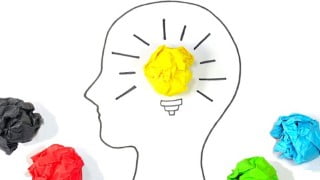

Innatist theory by Noam Chomsky explains that language learning is natural for humans, as babies are born with an innate ability to acquire language. Chomsky’s theory, known as the Language Acquisition Device (LAD), suggests that children use Universal Grammar to generate complex speech. This theory has implications for English Language Teaching (ELT) and Teaching English to Speakers of Other Languages (TESOL) learners.
1. What is Innatist theory by Noam Chomsky?
Answer: The innatist theory states that learning is natural for human beings. They believe that babies enter the worlds with a biological prosperity, an inborn device, to learn language(Cooter and & Reutzel)…..Chomsky backed this theory stating that children use the LAD(Universal Grammar) to generate and invent complex speech.
2. Who Proposed theory of Innatism?
Answer: The innate theory also known as Innatist theory, Nativist theory, Rationalist theory, Mentalist theory of language acquisition was developed in the mid-20th century(1959) by the famous American linguist Noam Chomsky.
3. What is Innatist perspective?
Answer: First language acquisition perspective. Noam Chomsky(2002) stated the innatist theory. He mentioned that children were born with the ability to acquire language(innate).He argues that language acquisition of children be related to their innate ability to biological language acquisition device(LAD)
4. How is Chomsky’s theory used in the classroom?
Answer: According to Chomsky, the goal is teaching is to help the students become interested in learning. He states the students “typically they come in interested, and the process of education is a way of driving that detect out of their minds”.
5. Innatism: It’s all in your mind:
· Chomsky(1959)argues that behaviorism can not provide sufficient explanations for children’s language acquisition for the following reasons:
· Children some to know more about the structure of their language, then they could be expected to learn on the basis of the samples of language they hear.
· The language children are exposed to includes flse starts,incomplete sentences and slips of the tongue and yet they learn to distinguish between grammatical and ungrammatical sentences.
· Children are by no mean systematically corrected or instructed language by parents.
Children are biologically programmed language.
In the same way of other biological functions.
Language develops in the child.
Learning to Walk
Language Acquisition
· LAD:Language acquistion Device or Black Box
· It contains all and only the principles which are universal to all human language.
(i.e……..Universal Grammar……UG)
· If children are pre-equipped with UG.
· What they have to learn is.
· The ways in which their own language make us of their principles.
· Children needs to access only to samples of a natural langauge.
· Which serves as a trigger to activate the device.
· Once the LAD is activated.
· They discover the structure of the language to be learned.
· By motivating the innate knowledge of basic grammatical principles(UG)
· To the structure of the particular language in the environment.
Who this course is for:
- English Langugae Teaching (ELT) Learners.
- Teaching of English to Speakers of other Languages (TESOL) Learners.
User Reviews
Be the first to review “Free English Language Tutorial – Innatism Theory and native language acquisition.”
You must be logged in to post a review.





There are no reviews yet.