
UPDATED! 2023 – Winning the War for Talent in Industry 4.0
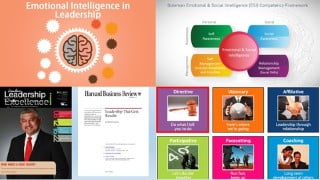

Develop your emotional and social intelligence competencies to become a successful leader in today’s VUCA world. This masterclass will help you understand the importance of these skills and how they can contribute to organizational success. Enhance your leadership effectiveness and create a sustainable competitive advantage for your organization.
What you’ll learn
- Develop the ability to identify, inspire, motivate and retain the talent for organizational success
- Understand and leverage on the best working practices in talent management
- Develop the retention strategies so as to ensure that their organization wins the race for the best talent
- Leverage on their emotional and social intelligence competencies to improve retention of top performers
Winning the War for Talent in Industry 4.0 with Emotional & Social Intelligence (ESI) Competencies
“Because individuals in organizations can rarely be successful alone, they must influence, lead, and coordinate their efforts with others in order to achieve their goals – to translate vision into action. A leader’s success rests in large part upon his or her ability to influence the different groups he or she must relate to in the organization: the superiors, peers, and direct reports. The life of a leader has plenty of demands and pressures. Having the skills to handle them would seem to be a prerequisite for success. We have identified several specific skills from a wide array of emotional & social intelligence competencies, as the ones that differentiate successful leaders from other people. Fortunately, these skills can be improved with the proper training and coaching.”
Prof Sattar Bawany (2023) – Leadership in Disruptive Times: Negotiating the New Balance
What makes a Great Leader? The importance of emotional & social intelligence competencies of highly effective leaders.
Introduction
Emotional intelligence involves the control of one’s emotions to fit a particular situation. This is different from a purely rational or intellectual response to various management situations. When one has a high EQ, that person will react in a proper manner to the individuals in the situation, as well as the situation itself. A person reacting with their IQ would simply react to the facts of the situation and negate the “total picture”, which includes the irrationality of human behavior.
Traditionally, when evaluating the potential performance of an individual, the emphasis has been on cognitive or intellectual skills. However, compelling research shows us that Emotional Intelligence is twice as important as IQ as an indicator of future success.
Importance of Emotional & Social Intelligence in a VUCA World
Leadership in organizations requires mastery of a broad array of competencies. Leaders must have technical or subject matter expertise and knowledge. Without it, they cannot achieve credibility. They certainly need the cognitive ability to take in and absorb vast amounts of information quickly; to cut through what is irrelevant, to recognize the salient patterns, and to focus people’s attention on the parts that contain the critical meaning for the future success of their organizations. Thus, of course, without a high level of intellectual capability, they cannot cope with the complexity of the highly disruptive, VUCA world.
Today’s business environment is best described through the military acronym VUCA, which stands for volatile, uncertain, complex, and ambiguous — the world, in other words, of continuous unpredictability, constant and often sudden change, and complex situations with no easy answers. In such a world, success demands agility that can only come through an inspired and engaged workforce with the intrinsic motivation and freedom to take initiative and think on their own.
However, neither individual attributes, such as confidence or competence, nor the power that comes with positional authority will be enough to inspire the motivated workforce that the VUCA world demands. The best leaders will attract and engage loyal followers because of their ability to leverage emotional and social intelligence to accompany their rational competencies. Leaders who might be smart or have years of experience can still fail if they are emotionally tone-deaf — unable to process the emotions of others or even their own emotions during the chaotic situations at the workplace which is the result of the VUCA forces at play.
Self-awareness is arguably one of the most critical emotional intelligence competencies for highly effective leaders. Effective self-assessment of feelings and emotions will help to improve a leader’s confidence and self-esteem as those with strong self-awareness or self-regard have an accurate picture of their strengths and weaknesses in dealing with the insurmountable challenges that they faced when leading their teams in the disruptive VUCA World.
Learning Outcomes:
Upon completion of this Masterclass, the participant will be able to better appreciate the significance and importance of developing their emotional and social intelligence competencies which are crucial in leading and engaging their team effectively in a VUCA World.
The program incorporates a number of unique features and works on a number of levels. It is specifically aimed at enhancing and developing the skills, knowledge, and behaviors of the participants.
The participants will develop their understanding of Leadership Effectiveness and how it will lead to a creation of a sustainable competitive advantage for their respective organizations through the development of an organizational climate that will contribute towards enhancing employee engagement and productivity during challenging times when operating in a disruptive VUCA business environment.
Who this course is for:
- Those in a leadership, managerial and/or supervisory role.
User Reviews
Be the first to review “UPDATED! 2023 – Winning the War for Talent in Industry 4.0”
You must be logged in to post a review.





There are no reviews yet.