
Food Skills and Techniques Course

Techniques and detailed information around stocks, sauces, meat courses, side dishes and desserts make up this free online food preparation skills course.
This course offers a broad overview of various food preparation skills and techniques. It starts with how to prepare stock and the various ingredients used for different types of stock. Then consider individual cuts of meat and the dishes for which each is most suitable. In addition, this course covers the sweeter side of cooking ? baking. It will take you through some of the methods and skills needed to make a variety of desserts.
What You Will Learn In This Free Course
Preparing Stocks, Soups and Produce
This module will teach you that stock is an essential component in many dishes and will form the base for many sauces. Once a stock has been made, use the correct cooling down methods, storing & reheating to avoid bacteria’s growth. Sauces are also an essential part of any dish because they marry individual components and provide an explosion of flavour. We will also view the many different types of groups containing plants, fruit, vegetables, and fungi prepared as a main meal or as a side dish.
Preparing and Cooking Meat
In this module, we will learn a wide variety of common meat that are readily available. One of the most prized of all meat is beef, and it is divided into three categories. When cooking beef take in consideration that different cuts require different cooking methods and times. The next meat we will learn about is lamb. If it is less than six months old, it?s prized for being sweet & flavoursome. Pork meat is very versatile, and it is the basis of many cured products essential in the kitchen.
Poultry
This module will consider the eight poultry categories, which include the most commonly known ones such as chicken, duck, goose, and quail. We will also cover essential points to keep in mind when buying poultry as there can be serious health risks if specific rules are overlooked. Follow the correct cooking times and techniques to help you achieve delicious poultry dishes mentioned in this module.
First Assessment; Module
Preparing and Cooking Seafood
Crucial points need to be remembered when selecting fresh fish. It should smell fresh and clean, with bright gills, eyes and firm flesh. Before it is cooked, specific procedures dealing with cleaning and gutting are crucial to do quickly to avoid spoiling a fish. The two categories that fish are divided into each have different cooking methods and handling. Shellfish & cephalopods and what are included in this category will be considered in this module.
Preparing Grain, Pasta and Egg Dishes
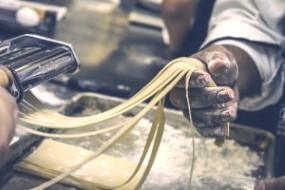
Grains are some of the oldest cultivated crops, forming the staple diet of countless civilisations. This module will consider the various types of rice & grain, each with a distinct flavour. Pasta-making is an essential skill to learn in the kitchen as fresh pasta can produce a tastier dish. Finally, we will learn about one of the most versatile ingredients in the kitchen: the egg. It can be used in sweet and savoury dishes, and are routinely used for their enriching and binding properties.
Preparing Desserts and Pastries
Desserts represent a large category of dishes, some of which require a chef to be specialised. In this module, we will give a broad overview of basic techniques and dishes. A dessert is traditionally eaten at the end of a meal. Gelatine is used to set a dessert that is served at room temperature or chilled. Another type of product commonly used in desserts is pastry. Pastry products have diverse uses, from canap?s and amuse bouches through to desserts and petits fours, & every course in between.
Making Biscuits, Cakes & Dough
This course will consider different types of baking products and their cooking methods. First, we look at biscuits, which take their name from a French word meaning “twice-cooked”, but most are now only baked once. Next, we consider cakes & sponges. The three main cooking methods described in this module allow you to change your cake or sponge’s structure and texture. Finally, we will learn about different kinds of flours and how may they affect your dish.
Second Assessment
This secondary assessment enables you to review your learning, so you can determine your knowledge and understanding of the following modules: Preparing Grain, Pasta and Egg Dishes, Preparing Desserts and Pastries, Making Biscuits & Dough.
Course assessment
User Reviews
Be the first to review “Food Skills and Techniques Course”
You must be logged in to post a review.



There are no reviews yet.