
Earn a Diploma in Sociology
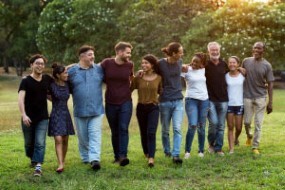

Study sociology to understand how society works as we examine the interaction between culture, marriage, family, work, money, healthcare, media and technology.
This diploma course lays out the important concepts and methods of sociology to explain how humans organize themselves into large groups. The study of sociology is crucial for planning and understanding communities to effectively manage their problems. We establish that society is a complex phenomenon with multiple interacting elements and show you how to use sociology to understand them. Sign up to see the world around you with new eyes
What You Will Learn In This Free Course
An Introduction To Sociology
This module introduces you to sociology by giving an overview of what culture is and how it develops and changes over time. It looks at areas such as population and diversity with reference to the three main theories: Structural-Functionalism, Conflict Theory and Symbolic Interactionism.
Introducing Culture
This module introduces expands on what culture is by examining popular culture and sub culture, how the norms are maintained and the effect of language and symbols on a culture. The different perspectives each theory has on culture are also outlined.
Sociology And Social Interaction
This model reviews the evolution of societies, particularly industrial and post-industrial, and the emergence of conflict theory. It also looks at the reality of social interactions or habitualisation and ?roles and status? affect society along with our own view of our selves.
Understanding Socialization
Socialisation, or is how we learn the norms and beliefs of our society, from childhood through education and into the workplace is covered here. It reviews why it is important and what problems people can have if they are not socialised into the society in which the live.
Introducing Groups And Organizations
Within all societies the are various groups and subgroups the people belong to. This module looks at the different types of groups, such as family or political, how they are formed, what type of structures they have and how they compete with each other.
Population, Urbanization And The Environment
Societies and the environment have a symbiotic relationship. As we impact on the environment we diminish what we can take from nature. We see the challenges in addressing climate change given the increase in urbanisation and different stages of industrialisation throughout the world.
Social Stratification In The United States
This module explores the different layers in society, such as class or caste. It also explores what affect this has on the individual: either enabling them through privilege and wealth to access a good education and job opportunities, or limiting them through poverty or social restriction to a poorer education and less skilled jobs.
Global Inequality
This module looks at the way countries are classified in terms of wealth and development and how the difference in wealth and resources leads to dependencies between countries that contribute to poverty. It also looks at the different types of poverty experienced in different places.
Inequality In Race And Ethnicity
Race and ethnicity are among the most common causes of inequality globally. This module looks at the roles and behaviours of both dominant and subordinate groups, how stereotyping perpetuates discrimination, what the different types of discrimination are, and the nature of intergroup relationships.
Inequality In Gender, Sex, And Sexuality
This module explores the effect of gender and gender identity on the individual in society. It looks at the differences between socialising and educating males and females and how this can restrict or enable them in life. It also looks at the role of both homophobia and heterosexism in society.
Inequality In Education
This module looks at the differences in educational resources around the world and the resulting impact on individuals. It also considers the role played by both the formal education and informal education within schools.
Diploma In Sociology – First Assessment
You must score 80% or more to pass this assessment.; Module
Sociology, Marriage And Family
This module looks at how sociology defines family, lines of decent and residency. It also explores how families vary from single parents to same-sex couples, and what the social impact of changing family structures is along with the challenges faced by families through divorce and family abuse.
Exploring Religion From A Sociological Perspective
This module explores religion from a sociological perspective and will give you an insight into the different types of religious organisations and classifications of religion, before looking at major world religions in more detail and how religion has brought about social change.
Impact Of Government And Politics On Society
In this module you will explore power and authority and its use in government and politics by looking at types or authority and the various forms for government from dictatorships and oligarchy to democracy including constitutional monarchies. You will look at the roles of race, gender and class in voter participation.
The Role Of Work And The Economy In Shaping Society
This module explores world of work and the economy with a focus on capitalism and socialism, both practice and from the view of the three main theories. You will also look at globalisation and how it manifests itself, in modern society along with the pros and cons from an economic point of view.
The Changing Role Of Healthcare In Society
This module studies healthcare from the social construction of health and medical sociology to global health and social epidemiology and the differences between low and high income nations. Using the United States as an example, you will explore the issues such access for different socio-economic groups, mental health and disability issues and the correlation between medicalisation and stigmatisation.
Deviance, Crime, And Social Control
This module looks at how sociology defines deviance or non-conformity and how it differs from crime, and how deviant behavior, such as Rosa Parks violated social norms when she refused to move to the “black section” can advance civil rights for all. You will look at how crime is categorized and the different areas of criminal justice systems.
Media And Technology
This module explores how new technologies, particularly in the area of media, impact society globally, particularly the divide between those who have early access to new technology. We see the effect of new media, television and advertising on social homogenization and social fragmentation.
Aging And The Elderly
In this module you will see how the role of the elderly in society is changing and how this impacts on the on their lives though the need to work longer, being disenfranchised and sometimes abused, while society will need to plan for and fund more resources of elder care in the future.
Social Movements And Social Change
In this module you will explore the role of social movements in changing society, why and how these movements form and evolve over time. You will also learn about crowds and collective behaviour along with the emerging norms in a society.
Sociological Research
This module studies how sociology research is carried out using the scientific method and understood in an interpretive framework. You will learn about the different methods used, such as surveys and field research as well as ethical considerations that need to be considered when doing research.
Diploma In Sociology – Second Assessment
You must score 80% or more to pass this assessment.; Module
Course assessment
User Reviews
Be the first to review “Earn a Diploma in Sociology”
You must be logged in to post a review.





There are no reviews yet.