
Ecology & Human Interaction with Nature
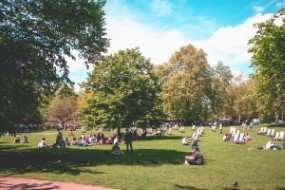

Learn how humanity has interacted with Nature throughout history and understand different ecological philosophies in this free online course.
Many believe that we are living in an era of ecological crisis. This free online course looks at how human societies have interacted with their natural environments across history and the impact they have had on these ecosystems. Understanding what has led up to this modern-day crisis will help create more sustainable solutions for a better future. This course will be helpful to anyone wanting to make a difference to the human-ecology dynamic.
What You Will Learn In This Free Course
Human Environmental Relations
This module will consider how society’s view of nature started to change as humans began to give more importance to scientific knowledge during the Renaissance Era. It will also consider three paradigms of Human Environmental Relations, that of Orientalism, Paternalism, and Communalism.
Nature and Religion
This module will discuss the role religion plays in human interaction with its environment and how anthropologists understand this relationship. It will also discuss the role rituals play in environmental relations.
The Ecological Crisis and Religion
This module will discuss what factors led to the Ecological Crisis we face today and the role that religion played. It will also discuss the views of Buddhism and Hinduism on Nature and how religion can play a role in helping us face the Ecological Crisis today.
First Assessment
This assessment enables you to review your learning so you can determine your knowledge and understanding of Modules 1 to 3 of the following course: ? Diploma in Ecology and Human Interaction with Nature.
Environmental Ethics
This module will discuss three different philosophies of Environmental Ethics, that of Deep Ecology, Social Ecology, and Ecofeminism. Environmental Ethics is a discipline in philosophy that studies the moral relationship of human beings to, and also the value and moral status of, the environment and its non-human contents.
Traditional Ecological Knowledge
This module will discuss how Indigenous Traditional Knowledge has been acquired and passed on through generations and how this Indigenous Knowledge can be merged with Scientific Knowledge in sustainably managing our natural resources.
Second Assessment
This assessment enables you to review your learning so you can determine your knowledge and understanding of Modules 4 to 5 of the following course: ? Diploma in Ecology and Human Interaction with Nature.
Course assessment
User Reviews
Be the first to review “Ecology & Human Interaction with Nature”
You must be logged in to post a review.





There are no reviews yet.