
Essential Guide to Tailoring: Structure & Shape
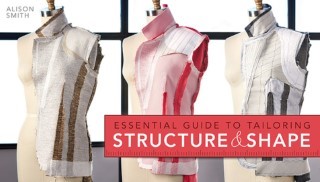

Create beautifully structured garments that maintain their exquisite shape and drape for years to come. Learn traditional, modern and hybrid tailoring techniques.
Class Preview
Create beautifully structured garments that maintain their exquisite shape and drape for years to come. Learn traditional, modern and hybrid tailoring techniques.
Introduction to Tailoring
Meet Alison Smith, the United Kingdom’s premier teacher of dressmaking, tailoring and corsetry. Alison discusses tailoring fabrics and the anatomy of a tailored garment. See how traditional tailoring has evolved to include speed tailoring and a hybrid variety, depending on fabric and garment.
Traditional Tailoring
Begin learning about traditional, canvased construction for garments such as jackets. Alison reviews the types of canvas and where they are used, then demonstrates how to cut out pattern pieces in canvas, mark and sew a bust dart and attach your canvas to the fabric with padstitching.
Creating Shape
Use a herringbone stitch to secure the edges of the canvas to your fabric and a basting stitch to hold the shape. Alison shows how to encourage the lapels and collar to roll properly by adding finer padstitching behind them. Steaming helps set the shape.
Tapes for Final Shaping
With Alison’s guidance, stabilize a jacket’s edges, neckline, armholes and roll line with cotton tape. You’ll see how to use steam to match the tape to the canvas edges, even around curves, and how to miter it at corners. You’ll secure the tape with hand-stitching.
Modern Tailoring Methods
When you don’t have time for extensive hand-stitching but still want a tailored look, modern tailoring with fusible interfacing might be just your speed. This method is fast, and suitable for fabrics with a looser weave. Alison shows you how to cut out and fuse, then reinforce with fusible tape.
Hybrid Tailoring
Hybrid tailoring is a simple alternative suitable for coating fabrics and high-end menswear. It features fusible interfacing and stabilizing tape on a jacket front and collar, and canvas with machine padstitching at the shoulders. Allison demonstrates this method with tips for pressing and shaping.
Variations & Additional Interfacing
Alison explores silhouette variations you might encounter in your tailoring projects and how you might interface them. Review interfacing options for a shawl-collared and collarless jacket, a tailored skirt and trousers. You’ll be eager to start building your own tailored wardrobe!
User Reviews
Be the first to review “Essential Guide to Tailoring: Structure & Shape”
You must be logged in to post a review.



There are no reviews yet.