
Projection Theory
Course facts
- Payment: Free, no certificate
- Credits: Non Credit
- Learning style: Self-paced, start anytime
- Resources: Editable Files; Lecture Notes; Lecture Videos; Problem Sets; Projects
- Before you start: 18.155 Differential Analysis
MIT OpenCourseWare details
- As taught in: Spring 2025
- Department: Mathematics

| Course Details | ||||||
|---|---|---|---|---|---|---|
|
||||||
| Outcomes | ||||||
|
||||||
| Price & Terms | ||||||
|
||||||
| Technical | ||||||
|
||||||
| Specification | ||||||
|
||||||

Graduate projection theory with lecture videos: the Fourier method, large sieve, sum-product theory, Bourgain’s theorem and open problems.
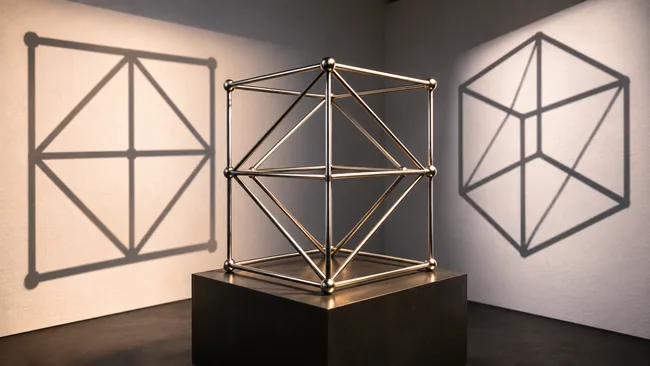
Projection theory asks how a set behaves when it is projected in different directions. Such questions get little attention in the usual graduate analysis curriculum, yet they arise across harmonic analysis, analytic number theory, additive combinatorics and homogeneous dynamics. This graduate course learns the classical techniques of the subject with full proofs, surveys its applications in those areas, and works up to recent research and open questions, including the Bourgain projection theorem and sharp projection theorems.
What You Will Achieve
- Prove the classical results of projection theory with full details
- Use the Fourier method and the large sieve on projection problems
- Connect projection theory to sum-product and incidence problems
- Identify open questions and recent ideas in the field
Program Overview
Classical Methods
The core techniques of projection theory.
- Fundamental methods of projection theory
- Projection theory in Euclidean space
- The Fourier method
- The large sieve and its uses in number theory
Combinatorial Structure
Incidences, sums and products.
- The Szemeredi-Trotter theorem
- Sum-product theory
- Contagious structure in projection theory
- The Balog-Szemeredi-Gowers theorem
Recent Developments
Deep theorems and current research.
- The Bourgain projection theorem
- Random walks on finite groups
- Homogeneous dynamics
- Sharp projection theorems
Course Completion
Job Outlook
The course serves mathematicians doing research in analysis, number theory and combinatorics.
Good for: Graduate students in mathematics with a background in analysis who want an entry point into active research.
Keep in mind: A spring 2025 course with lecture videos and notes, five problem sets with LaTeX templates and a final project guide listing open questions and reading ideas.
Bottom line: A rare research-level course that builds steadily up to the current frontier of the field.
Frequently Asked Questions
What can the final project be?
A 5 to 10 page paper that either explores a bigger, possibly open problem raised in class, or reads further into the literature and surveys a related topic.
Are lecture videos available?
Yes. The 24 lectures come with videos and lecture notes, along with editable LaTeX templates for the problem sets.
Where does projection theory come up?
In harmonic analysis, analytic number theory, additive combinatorics and homogeneous dynamics, each of which the course surveys and connects back to projections.
User Reviews
Write your review
You must be logged in to post a review.
Reviews can only be posted by registered learners. Log in or create a free account, then you will return here to post.




There are no reviews yet.