
Analysis of Biomolecular and Cellular Systems
Course facts
- Payment: Free, no certificate
- Credits: Non Credit
- Learning style: Self-paced, start anytime
- Resources: Exam Solutions; Exams; Instructor Insights; Lecture Notes; Problem Set Solutions; Problem Sets; Projects
MIT OpenCourseWare details
- As taught in: Fall 2012
- Department: Biological Engineering

| Course Details | ||||||
|---|---|---|---|---|---|---|
|
||||||
| Outcomes | ||||||
|
||||||
| Price & Terms | ||||||
|
||||||
| Technical | ||||||
|
||||||
| Specification | ||||||
|
||||||

Modeling biology with numbers: kinetics, signaling networks and protein design in MATLAB and Python, with notes, projects and past exams to practice on.
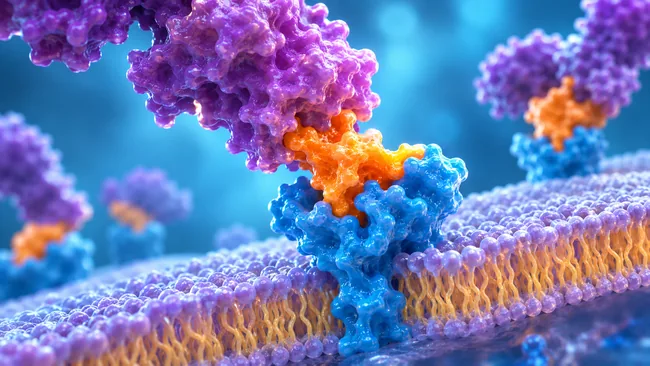
Biological engineers need numbers to guide their design decisions, and this class shows how to analyze living systems mathematically and computationally. Problems range in scale through proteins and cellular signaling pathways as far as whole-body pharmacokinetics. Two themes hold it together, modeling complex dynamic systems and designing proteins, each anchored by a multi-part project.
What You Will Achieve
- Model protein-ligand binding and enzyme kinetics
- Simulate signaling cascades and gene regulation in MATLAB
- Design proteins using Python, PyMOL and PyRosetta
- Connect structure and folding to drug development
Program Overview
Binding and Kinetics
Measuring and describing interactions.
- Titration analysis and mass spectrometry
- Michaelis-Menten kinetics
- Competitive and non-competitive inhibition
Cellular Networks
Modeling dynamic behavior in cells.
- Ultrasensitivity in the MAPK cascade
- Signal shut-down and ligand depletion
- Negative and positive autoregulation
Protein Design
Computing and engineering new molecules.
- Hydrogen bonding and the hydrophobic effect
- The Metropolis algorithm and molecular dynamics
- Imatinib as a drug case study
- Thermodynamics and kinetics of protein folding
Course Completion
Job Outlook
These skills are relevant to biotechnology, drug discovery, computational biology and protein engineering.
Good for: Biological engineering students, typically in their third year, who want to apply modeling and programming directly to biological questions.
Keep in mind: Final exams are not provided, and some past exams lack solutions. No lecture videos are listed, and the 2012 tools may need updated versions.
Bottom line: A rich and quantitative class with notes, projects and exams, well suited to hands-on learners.
Frequently Asked Questions
What are the two design projects?
A Protein Networks Project, modeled in MATLAB, and a Protein Design Project, using Python, PyMOL and PyRosetta. Each is handed in as several parts during the term.
Which past exams are provided?
Exams from 2010, 2011 and 2012. Solutions are available only for Exam 1 in 2011 and 2012, and the final exams are not published.
Who taught the class?
Forest White taught the first half, on kinetics and networks, and Ernest Fraenkel taught the protein design half. A guest lecture covers drug delivery.


There are no reviews yet.