
Biochemistry and Pharmacology of Synaptic Transmission
Course facts
- Payment: Free, no certificate
- Credits: Non Credit
- Learning style: Self-paced, start anytime
- Resources: Written Assignments
MIT OpenCourseWare details
- As taught in: Fall 2007
- Department: Brain and Cognitive Sciences

| Course Details | ||||||
|---|---|---|---|---|---|---|
|
||||||
| Outcomes | ||||||
|
||||||
| Price & Terms | ||||||
|
||||||
| Technical | ||||||
|
||||||
| Specification | ||||||
|
||||||

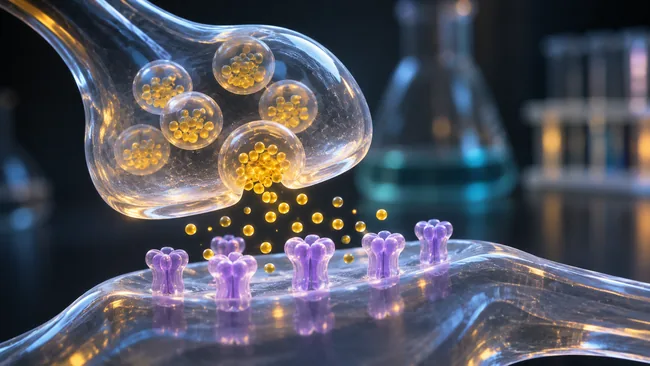
Work through how neurotransmitters are made, released and received, covering monoamines, amino acids and peptides and their links to disease.
Nerve terminals carry signals by releasing chemicals, and much of pharmacology works by changing what those chemicals do. This class goes through the transmitters one family at a time, looking at how they are made, released, inactivated and received. Several sessions connect them to conditions such as Alzheimer’s disease, Parkinson’s disease and obesity.
What You Will Achieve
- Explain how neurotransmitters are synthesized, released and inactivated
- Compare the biochemistry of monoamine, amino acid and peptide transmitters
- Connect particular transmitters to human diseases
- Evaluate evidence on how protein alleles affect neuropsychiatric disease risk
Program Overview
Monoamine Transmitters
The first half covers receptors and the main monoamines.
- Membranes and the blood brain barrier
- Acetylcholine and Alzheimer’s disease
- Dopamine and Parkinson’s disease
- Serotonin, behavior and obesity
Other Transmitters and Modulators
The second half widens to amino acids, peptides and modulators.
- Glutamate, learning and toxicity
- GABA, glycine and histamine
- Cannabinoids and adenosine
- Peptides and drug development
Course Completion
Job Outlook
This grounding is useful in neuroscience research and drug development, wherever work depends on how synaptic chemistry operates.
Good for: Biology and neuroscience readers who want a transmitter-by-transmitter account of how brain chemistry and drugs interact.
Keep in mind: From fall 2007, with a few session handouts and one paper topic but no lecture notes or exams, so the required textbook does most of the teaching.
Bottom line: A useful reading plan for neuropharmacology, though you will depend on the textbook to fill it in.
Frequently Asked Questions
What was the paper about?
Undergraduates picked SERT, MAO or COMT and wrote about the evidence for its different forms, how the alleles differ in function and any link to psychiatric disease.
Which book does it follow?
The required text is The Biochemical Basis of Neuropharmacology by Cooper, Bloom and Roth, 8th edition, which you would need to find.
Which handouts are published?
The page has handouts on antidepressants, the spinal cord, glutamate structure, neurotransmitter release, and LTP and LTD, plus an introductory recitation handout.


There are no reviews yet.