
Physical Intelligence
Course facts
- Payment: Free, no certificate
- Credits: Non Credit
- Learning style: Self-paced, start anytime
MIT OpenCourseWare details
- As taught in: January IAP 2002
- Department: Athletics, Physical Education and Recreation

| Course Details | ||||||
|---|---|---|---|---|---|---|
|
||||||
| Outcomes | ||||||
|
||||||
| Price & Terms | ||||||
|
||||||
| Specification | ||||||
|
||||||

Activities and session ideas that explore balance, perception and coordination, treating the gym as a laboratory for the mind and body.
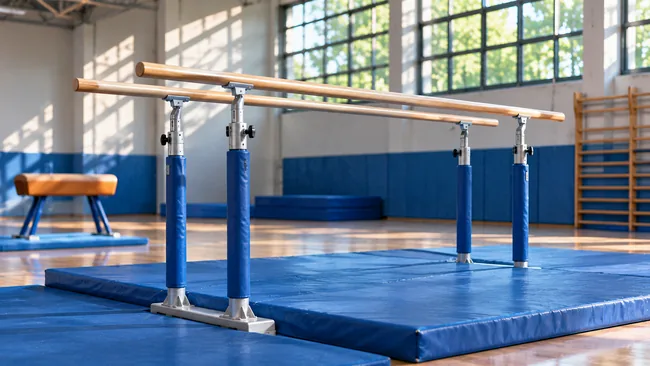
The body is the basis of our experience in the world, and this seminar treats it as a foundation of cognitive intelligence. Using a gymnastics gym as its laboratory, the 2002 activity explores gravity and balance, perception, proprioception, coordination and movement through exercises, readings and discussions. The aim is to develop balance, agility, flexibility and strength, along with an appreciation for the unity of mind and body.
What You Will Achieve
- Describe how perception and proprioception shape your sense of your body in space
- Develop balance, agility, flexibility and strength through exercises and activities
- Create a sensory map of an experience and compare it with those of others
- Design a simple exercise that explores balance or a sense of weight
Program Overview
Gravity and the Senses
How the body meets gravity and takes in the world.
- Orientation in relation to gravity
- Perception
- Proprioception
- Spatial perception
Coordination and Learning
How movement patterns develop and differ.
- Complex coordination
- Learning and development
- E-motion
Tools and Flight
Extending and transcending the body.
- Physical problem solving with tools
- Flight and the limits of our physical condition
Course Completion
Job Outlook
The ideas connect physical education with disciplines that study movement, perception and how people learn physical skills.
Good for: Movement teachers, coaches and curious readers looking for ideas on teaching through physical experience.
Keep in mind: What is published is a session list with activity descriptions, from 2002. Many activities need specialized settings, such as high-speed video, a padded incline or a high ropes course, so treat them as inspiration.
Bottom line: An inventive activity plan that treats the gym as a laboratory, useful more as a source of ideas than as a course to follow.
Frequently Asked Questions
What is meant by physical intelligence?
It is our innate ability to learn physical skills. The course description presents it as a powerful complement to cognitive intelligence, and physical education as more than strength training and fitness.
What is the Mapping Perception activity?
Students spent an hour blindfolded in an open field, noticing sounds, smells and textures, then each created a sensory map of the experience to compare with others.
Could I run these activities myself?
Some, such as making a sensory map or building wearable structures from simple materials, are easier to adapt. Others used a high-speed imaging system, a 40-foot padded incline and a high beam.

There are no reviews yet.