
Maya Culture in Yucatan
Course facts
- Payment: Free to learn, certificate paid
- Credits: Non Credit
- Learning style: Self-paced, start anytime
- Format: Video Based
edX details
- Pacing: Self-paced
- Available until: Jan 2, 2027

| Course Details | ||||||||
|---|---|---|---|---|---|---|---|---|
|
||||||||
| Languages | ||||||||
|
||||||||
| Outcomes | ||||||||
|
||||||||
| Price & Terms | ||||||||
|
||||||||
| Technical | ||||||||
|
||||||||
| Specification | ||||||||
|
||||||||

Learn about the Maya of Yucatán: their society, religion, calendars, architecture, resistance to Spanish rule and life today, in a video-based course.
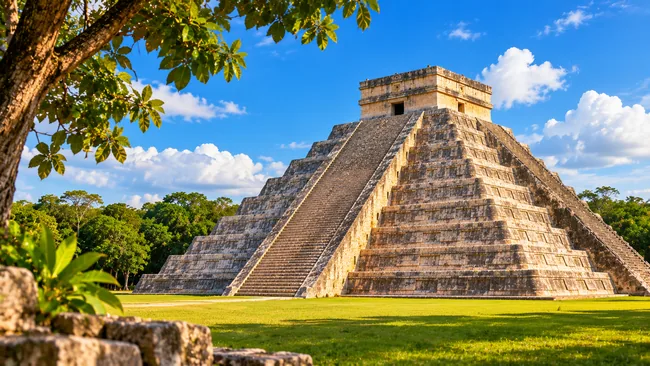
The Maya of the Yucatán Peninsula raised cities such as Chichén Itzá, Uxmal, Edzná and Calakmul, and their descendants still live in the region today. You study how this civilization grew and declined, how its society, religion, numbers, writing and calendars worked, what defines its buildings, how Maya communities resisted Spanish rule up to the early 20th century, and how they preserve their heritage in modern Yucatán while facing serious challenges.
What You Will Achieve
- Explain the scientific achievements of the Maya, including their arithmetic, hieroglyphic writing and calendars.
- Describe the class structure of Maya society and how its religion tied people, rulers and gods to nature.
- Recognize the architectural styles that set apart the pre-Hispanic cities of the Yucatán Peninsula.
- Trace the key events of Maya resistance to Spanish rule up to the early 20th century and relate them to Maya communities today.
Program Overview
Maya Civilization: Origin, Development and Decline
How the Maya civilization formed, spread across its regions, built cities on the peninsula, and the reasons put forward for its decline as the Spaniards arrived.
- Maya regions and influential zones
- Pre-Hispanic cities in Yucatán
- Maya chiefdoms and the impact of the conquest
- Sources of information and hieroglyphic writing
Maya Society, Religion and Architecture
The pyramidal social order, religious beliefs and scientific knowledge of the Maya, followed by the materials, elements and regional styles of their monumental buildings.
- Class division, supreme lords and the role of women
- Gods, nature and the syncretism of the conquest
- Maya arithmetic, writing and the calendar
- Puuc, Chenes, Río Bec and Central Mexican styles
The Conquest, Maya Resistance and the Maya Today
Spanish dominion over Yucatán and the uprisings it provoked, then the population, social situation, rituals, attire and literature of contemporary Maya communities.
- Montejo, the Xius and Nachi Cocom
- Diego de Landa and the Cisteil uprising
- The Caste War and the Cruzoob
- Discrimination, rituals, attire and Maya literature today
Certificate Awarded (Paid)
Complete the course to earn it. The course is free to study; the certificate is optional and has a fee.
Job Outlook
Knowledge of Maya history and culture supports work in heritage interpretation, museum education, cultural tourism in the Yucatán Peninsula, history teaching, and research on Mexico’s Indigenous communities.
Good for: Readers interested in Mexican history and pre-Hispanic cultures who want one course linking ancient Maya cities, the colonial period and the Maya of modern Yucatán.
Keep in mind: Some of its unit headings are in Spanish while the lesson titles are in English, so check the language of the videos and transcripts before you enroll.
Bottom line: A history of Yucatán’s Maya that gives colonial resistance and living communities as much room as the ancient cities and their architecture.
Frequently Asked Questions
Which Maya sites and building styles does the course discuss?
The course names Chichén Itzá, Uxmal, Edzná and Calakmul among the peninsula's key sites. Its architecture lessons look at monumental building, the main elements of Maya structures, the materials used, and the Puuc, Chenes, Río Bec and Central Mexican styles.
Does the course include interviews with scholars?
Yes. The lessons on Maya society and religion include an interview with Dr. John Chuchiak and another with Dr. Tsubasa Okoshi, alongside the lessons on social classes, religion, arithmetic, writing and the calendar.
How does the course treat the Spanish conquest?
A full unit follows Spanish dominion over Yucatán and Maya resistance to it: the alliance between Montejo and the Xius, Nachi Cocom, the rebellion of 5 Cimi and 19 Xul, Diego de Landa, Jacinto Canek and the Cisteil uprising, the Caste War, the Cruzoob, and the wounds that remain.
What does the course say about the Maya today?
The closing lessons describe the population, geography and social situation of contemporary Maya, the discrimination they face, rituals that persist, their role in caring for the environment, current traditional attire, and Maya literature across two lessons.
Please log in to report a problem with this page.


There are no reviews yet.