
Inequality monitoring in immunization
|
Ensuring universal access to immunization promotes better population health and improved outcomes across diverse aspects of development. Unfortunately, however, the benefits of vaccines are spread unevenly. Monitoring inequality in vaccination coverage is a way to identify where inequalities exist and where disadvantaged subgroups stand in terms of access to and utilization of health services. This course introduces the general steps of inequality monitoring in immunization, which should be an integral part of a country’s immunization programme.
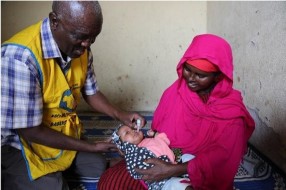
Photo credits: WHO / I. Ahmed
Overview: Equity is essential to the Sustainable Development Goal principle of ‘leaving no one behind’, as well as central to the WHO GPW13 objective of ‘serving the vulnerable’. Equity is embedded as a priority in global efforts to promote immunization. The WHO Immunization Agenda 2030: a global strategy to leave no one behind envisions “a world where everyone, everywhere, at every age, fully benefits from vaccines for good health and well-being”.
Monitoring inequalities in immunization is an important part of efforts to promote equity. Systematic approaches to measure inequalities in immunization provide information that can help countries tailor policies, programmes and service provision and demand promotion to close gaps in immunization. The outputs of inequality monitoring in immunization are particularly relevant to immunization programme review and planning activities, such as the desk review stage of the Expanded Programme on Immunization (EPI) Review and comprehensive multi-year strategic plans (cMYPs).
Course contents
Introduction:
This introductory module gives an overview of monitoring inequality in the context of immunization.
Module 1: Determine scope of monitoring:
By the end of this module, you should be able to: explain the processes of deciding the target population, identifying relevant immunization indicators, and identifying relevant dimensions of inequality.
Module 2: Obtain data:
By the end of this module, you should be able to: explain how to conduct data source mapping; and describe how to determine whether sufficient data are currently available to conduct inequality monitoring.
Module 3: Analyse data:
By the end of this module, you should be able to: describe how to prepare disaggregated data; and explain how to calculate key summary measures of inequality.
Module 4: Report results:
By the end of this module, you should be able to: explain how to define the purpose of reporting and the target audience; describe decisions surrounding the scope of reporting, the technical content and the methods of presenting data; and describe best practices in reporting results of inequality monitoring.
Module 5: Knowledge translation:
By the end of this module, you should be able to: describe how to identify priority areas for action; explain the importance of integrating equity considerations into immunization programmes and policies; and describe how to identify opportunities for intersectoral collaboration.
Final assessment
User Reviews
Be the first to review “Inequality monitoring in immunization”
You must be logged in to post a review.




There are no reviews yet.