
Introduction to Electronic Components: A Step By Step Guide
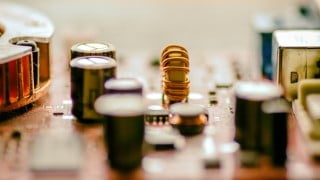

Learn the basics of electronic components, their uses, and how they work within an electrical system. This course covers voltage, resistance, current, and the use of components like resistors, capacitors, diodes, and transistors. Perfect for beginners or those looking to refresh their knowledge.
What you’ll learn
- Understand the concepts of voltage, resistance and current
- Understand the VOLT OHM Meter/ Digital Multi Meter and how to use safely
- Use Ohm’s Law to calculate voltage, current and resistance
- Use resistors in various configurations
- Understand and use capacitors
- Understand and use diodes
- Understand and use a transistor
This Introduction to Electronic Components course is intended for those interested in learning electronics.
The course introduces the students to the concept of electronic components, their uses, and how they work within an electrical system. The electronics industry has been skyrocketing over the last few years as more and more people are using electrical appliances for their everyday needs. It is so important to know the basics of how these components work, as they are a necessity in modern society. Here is a step-by-step guide to help you understand what electronic components are, what they do, and how they function.
Electronic components are the building blocks of any electronic device and they come in a wide range of sizes and shapes. These videos will walk you through some basic information about electronics so you know how to identify and use these building blocks. Practical examples are also added.
35 Lecture | 3.5 Hour of HD Content | 2 Hour of Practical Videos | 4200 Students
Why you should take this course?
You will learn how to read circuit diagrams
You will learn how to solder
You will learn how to identify parts on an electronic schematic diagram
You will become familiar with the most commonly used electronic components
This course will give you everything you need to start playing with electronics components and fix electronic devices.
It is designed so that you can quickly get started without having to spend months of your time learning lots of irrelevant information.
it’ll cover all of the basics, so even if you never plan on getting any further than this one course, you’ll still learn more than enough.
You will learn how to take care of the small components that are inside your electronics
>>> Continues Updates <<<
4 Star | More Than 4200 STUDENTS!!! THANK YOU!!!
What students are saying:
André stenberg says, “This is a nice introduction course to those who would like to learn the basics of electronics.”
Mike Mackley says, “It’s covering the topic and establishing the basics very well.”
Sunil Thakur says, “Great course for beginning in electronics, especially enjoyed the water analogy part to make learning easier.”
Qays Qaysaneah says, “Clear and Simple, and that is so nice :)”
Welcome to this course.
Topics that we will be discussed during the Introduction to Electronic Components Course are listed here in a brief outline.
The Components of Electricity
Volt-Ohm-Meter Basics (Measuring Electricity)
Circuit Diagrams Basics (Electronic Roadmaps)
The Resistor
Ohm’s Law
The Capacitor
The Inductor
The Diode
The Transistor (Electronic Valves)
Things You Should Know before we start
The topics up to and including Ohm’s Law are what we will start with.
The remaining topics cover additional fundamental components of basic electronics.
The course will be in platform discussion, guide practices, and open question format as the material dictates.
The course uses a standardized volt-ohm-meter (VOM) for illustration.
Quick Summary of things that we will discuss through this course
In this Introduction to Electronic Components Course, We will begin by discussing the three components that make up electricity.
Next will spend more extensive time on how to measure the three components of electricity. During this section, we will explore two of the three components (voltage and current).
This section will cover VOM basics and allow you to become familiar with the most important and most basic piece of test equipment.
At the next section, Circuit diagrams section, you will learn how to use electronic components symbols on an electronic road map called a schematic or circuit diagram.
Many of the symbols will represent new concepts for many of you and these concepts will be fully developed once we finish the section.
As a result, you will develop the fundamentals of interpreting circuit diagrams so that these illustrations of the arrangement of electronic components can help you with the remainder of the course.
The final of the three components, resistors will be covered next.
How the three component are related mathematically is Ohm’s Law and this fundamental law will be covered in detail. These sections make up the basic, basic material of electronics.
Four additional components common to virtually all electronic circuits are the capacitor, inductor, diode, and transistor. I will cover these topics with a level of detail that will familiarize the audience with the function of these components and the basics of how they work and react in different situations.
There are text reading assignments for each section of the course.
Who this course is for:
- Anyone with a need to brush up their knowledge of basic electronics
User Reviews
Be the first to review “Introduction to Electronic Components: A Step By Step Guide”
You must be logged in to post a review.



There are no reviews yet.