
Water and Wastewater Treatment Engineering
Course facts
- Payment: Free, no certificate
- Credits: Non Credit
- Learning style: Self-paced, start anytime
- Resources: Exam Solutions; Exams; Lecture Notes; Problem Set Solutions; Problem Sets; Projects with Examples
MIT OpenCourseWare details
- As taught in: Spring 2006
- Department: Civil and Environmental Engineering

| Course Details | ||||||
|---|---|---|---|---|---|---|
|
||||||
| Outcomes | ||||||
|
||||||
| Price & Terms | ||||||
|
||||||
| Technical | ||||||
|
||||||
| Specification | ||||||
|
||||||

A course on treating drinking water and wastewater, covering reactor theory, filtration, disinfection and activated sludge, with notes, exams and solutions.
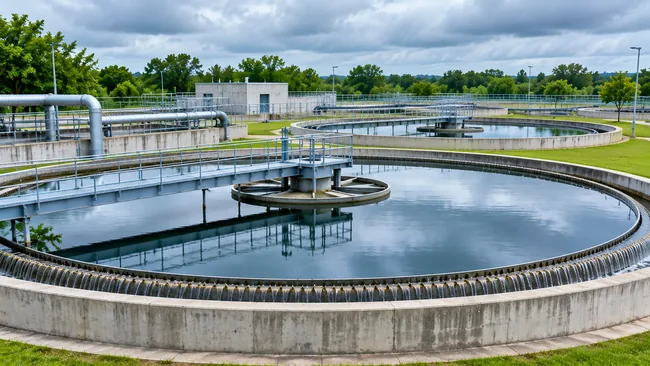
Clean drinking water and safe wastewater discharge both depend on a handful of physical, chemical and biological processes. This course explains those processes and the reactor theory used to design treatment systems, with the emphasis on principles over plant operating detail. It covers municipal systems for both drinking water and wastewater, as well as engineered and natural treatment processes.
What You Will Achieve
- Apply reactor theory and kinetics to treatment tank design
- Explain sedimentation, filtration, softening and disinfection processes
- Compare biological wastewater treatment options
- Prepare a conceptual design for a water quality problem
Program Overview
Water Quality and Reactor Tanks
The class starts with why treatment is needed and how water behaves in tanks.
- Water quality parameters and standards
- Mixed tanks and plug flow
- Residence time distribution
Drinking Water Treatment Processes
Physical and chemical steps follow in turn, with a visit to a municipal plant on the original schedule.
- Sedimentation-flocculation
- Filtration
- Softening, adsorption and ion exchange
- Disinfection
Biological Treatment and Sludge
The wastewater half covers kinetics, biological systems and what happens to the solids.
- Biological reaction kinetics
- Stabilization ponds
- Activated sludge treatment
- Nutrient removal and sludge digestion
Course Completion
Job Outlook
These skills are used in environmental engineering, municipal water utilities, consulting and the design of treatment systems for communities and industry.
Good for: Civil and environmental engineering students, and practitioners in water utilities who want the theory behind treatment plant design.
Keep in mind: Standards and references date from about 2006, so check current regulations. The two plant field trips were local to the class and cannot be repeated from the notes.
Bottom line: A complete and practical set of notes, problems and exams on treatment fundamentals, still useful for learning the principles.
Frequently Asked Questions
What study materials are included?
You get lecture notes, eight problem sets with solutions, midterm and final exams with solutions, and suggested design project ideas with several student projects as examples.
What is the main reading?
It uses Reynolds and Richards, Unit Operations and Processes in Environmental Engineering, as the main reading. The syllabus also lists references on domestic wastewater in developing countries and on water treatment design.
What did the design project look like?
Students chose a topic and produced a design or analysis. Published examples include a rain garden for stormwater control, a stabilization pond in the Galapagos Islands and a water reclamation plant in California.


There are no reviews yet.