
Building Technology Laboratory
Course facts
- Payment: Free, no certificate
- Credits: Non Credit
- Learning style: Self-paced, start anytime
- Resources: Design Assignments; Lecture Notes
MIT OpenCourseWare details
- As taught in: Spring 2004
- Department: Architecture

| Course Details | ||||||
|---|---|---|---|---|---|---|
|
||||||
| Outcomes | ||||||
|
||||||
| Price & Terms | ||||||
|
||||||
| Technical | ||||||
|
||||||
| Specification | ||||||
|
||||||

Lecture notes and design assignments on testing passive solar heating, natural ventilation and daylighting with models and simulation.
Passive solar heating, natural ventilation and daylighting can each be tested with simple models and careful measurement. This laboratory course works through three extended experiments that build and test model houses, compare predictions with measured temperatures, airflows and light levels, and bring in simulation. The experiments draw on work in the Hunza Valley of Northern Pakistan, in Gujarat, India, and in Beijing and Shanghai, China.
What You Will Achieve
- Model the thermal dynamics of a house and compare predictions with measured temperatures
- Estimate wind-driven and buoyancy-driven airflows through a building
- Size windows for natural light using daylighting design procedures
- Interpret simulation results alongside measurements from physical models
Program Overview
Design of Passive-Solar Houses
Thermal models tested against a real test house.
- Modeling thermal systems with electrical-circuit analogies
- Solar heat gain through windows, walls and roofs
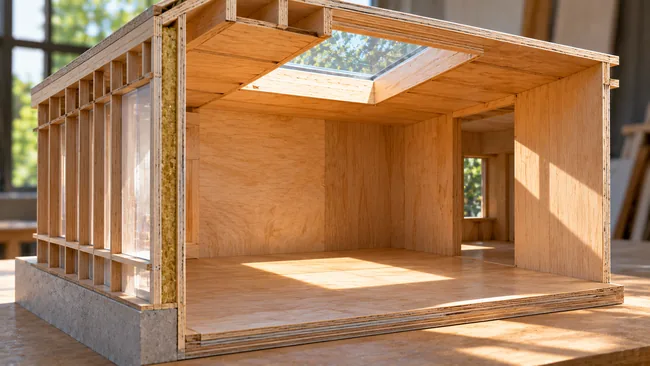
- Construction of a passive-solar test house
- Multi-node models in MATLAB
Natural Ventilation
How air moves through and around buildings.
- Fundamentals of natural ventilation
- Buoyancy and wind-driven airflows
- Airflow simulation using CONTAMW
- Scaling relationships and Reynolds number
Daylighting and Sustainable Housing
Light levels in houses, then integrating all three.
- Lighting fundamentals and measurements
- Lumen and daylight factor methods
- Daylighting simulation in Gujarati houses
- Design of sustainable housing for Afghanistan
Course Completion
Job Outlook
These experimental and simulation methods apply in building technology and architecture, wherever energy use, airflow and lighting in buildings are designed and evaluated.
Good for: Architecture and building technology students who want to see how passive design ideas are tested by experiment.
Keep in mind: This 2004 course depended on team lab work with sensors and an anemometer, and on simulation programs of that time, such as Lightscape. You get the notes and assignments, not the lab.
Bottom line: A well-built set of hands-on experiments in passive design, with attention to the cultures and places that inspired them.
Frequently Asked Questions
What is the Mr. Potato Head measurement?
An early session uses thermal-mass measurements on Mr. Potato Head, with a thermal-dynamics spreadsheet program, and a later session reviews the thermal time constant estimates that came out of it.
Which real places inspired the experiments?
They draw on recent or ongoing work in the Hunza Valley of Northern Pakistan, in rural villages of Gujarat, India, and in Beijing and Shanghai, with a design session on housing for Afghanistan.
Is there a book on lighting?
The syllabus names Illumination Engineering by J. B. Murdoch, which relates to the daylighting lab. Design procedures and simulation tools for the other experiments appear in the session list.


There are no reviews yet.