
Architecture
Architecture courses empower creative visionaries to design the physical world, blending artistic expression with engineering precision to create sustainable, functional, and aesthetically inspiring environments.
Read More
- Key Skills:
- Architectural design, CAD (AutoCAD/Revit), building information modeling (BIM), sustainable design, structural systems, history of architecture.
- Typical Duration:
- Most courses take 10–40 hours.
- Top Providers:
- MIT OpenCourseWare, edX, SWAYAM, Kadenze, NPTEL+
Designing for the Future
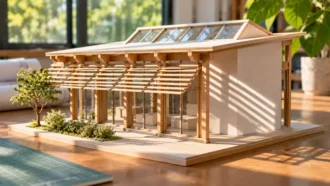
Architecture is more than just drawing buildings; it is the discipline of shaping human experience. Modern architectural education has shifted significantly towards sustainability and digital integration. Learners explore “Green Architecture,” studying how to minimize a building’s carbon footprint through passive solar design, renewable materials, and energy-efficient systems. This environmental consciousness is paired with deep historical study, ensuring that new designs respect the cultural and urban contexts in which they sit.
The technical curriculum is dominated by digital tools. The days of hand-drafting on vellum are largely gone, replaced by Computer-Aided Design (CAD) and Building Information Modeling (BIM). Courses teach you to use software like Revit and Rhino not just to draw lines, but to simulate how a building will perform under stress, how light will move through it, and how much it will cost to build. This “digital twin” technology allows architects to test thousands of iterations before breaking ground. Whether you are designing a micro-home or a mega-city, the ability to visualize complex spatial relationships is the core competency that separates a builder from an architect.
Who Should Enroll?
- Aspiring Architects: Students building a portfolio to apply for accredited Master of Architecture (M.Arch) programs.
- Civil Engineers: Technical professionals seeking to develop their design sensibility and understanding of spatial aesthetics.
- Interior Designers: Creatives looking to expand their scope of work to include structural and exterior modifications.
- Urban Planners: Professionals who need to understand individual building typologies to better design city districts.
Enroll in an Architecture course today to master the intersection of art and engineering, and leave a lasting mark on the built environment.
Showing 1–12 of 17 resultsSorted by latest





Frequently Asked Questions about Architecture Courses
1. Do I need to be good at drawing to be an architect?
While the ability to sketch a quick concept is valuable for communicating ideas, you do not need to be a fine artist. Modern architecture relies heavily on computer software. The focus is more on “spatial reasoning”—the ability to visualize 3D objects in your mind—than on perfect pencil rendering.
2. What is the difference between Architecture and Civil Engineering?
Architecture focuses on the design, aesthetics, and functionality of a building (how it looks and feels). Civil Engineering focuses on the structural integrity and mechanics (how it stands up). Architects dream up the shape; engineers ensure the physics works so it doesn’t collapse. Both work closely together.
3. What software is standard in the industry?
Autodesk Revit is the industry standard for Building Information Modeling (BIM). AutoCAD is still widely used for 2D drafting. For 3D modeling and complex geometry, Rhino (with Grasshopper) is popular. SketchUp is often used for quick, early-stage conceptual modeling. Proficiency in these tools is a major hiring factor.
4. Can I become a licensed architect through online courses?
Generally, no. Becoming a licensed architect usually requires a professional degree (B.Arch or M.Arch) from an accredited university, followed by thousands of hours of internship (AXP) and passing the ARE exams. Online courses are excellent for skill-building, software training, and portfolio prep, but they rarely replace the accredited degree requirement.
5. What is “Sustainable Architecture”?
Sustainable Architecture (or Green Building) involves designing structures that minimize environmental impact. You learn about LEED certification, net-zero energy goals, and using recycled materials. It is a critical part of modern curriculums as climate change regulations force the construction industry to adapt.
6. How much math is involved?
You need a solid understanding of geometry, trigonometry, and basic algebra to understand structural loads and dimensions. However, you do not need to be a mathematician. The heavy structural calculations are typically handled by civil engineers, while the architect focuses on the geometry and spatial logic.
7. What is a “Portfolio” and why do I need one?
A portfolio is a curated book of your design work, showing your sketches, models, and renderings. It is the single most important document for getting into architecture school or landing a job. Courses often include “studio” modules specifically designed to help you produce high-quality pieces for your portfolio.
8. Do these courses cover “History of Architecture”?
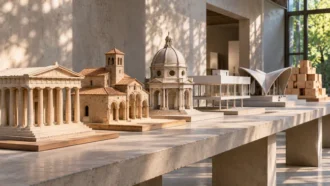
Yes, history is a fundamental pillar. You learn about styles ranging from Classical and Gothic to Modernism and Deconstructivism. Understanding history helps you understand why buildings look the way they do and gives you a “visual vocabulary” to use in your own contemporary designs.
9. What is “Urban Design”?
Urban Design sits between architecture and urban planning. It deals with the design of groups of buildings, streets, and public spaces rather than just a single structure. It focuses on how people move through a city and how buildings interact with the street level to create a vibrant community.
10. Can I learn to build physical models online?
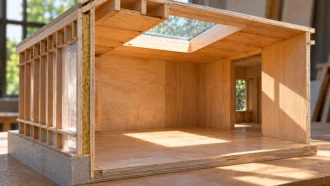
While you can’t be in a physical workshop, online courses teach you the logic of model making—how to slice a 3D digital model into flat pieces that can be laser cut or printed. You learn to think about materials and assembly, which you can then practice at home or a local makerspace.