
Environmental Technologies in Buildings
Course facts
- Payment: Free, no certificate
- Credits: Non Credit
- Learning style: Self-paced, start anytime
- Resources: Activity Assignments; Lecture Notes; Projects
- Before you start: There are no prerequisites for this course.
MIT OpenCourseWare details
- As taught in: Fall 2018
- Department: Architecture

| Course Details | ||||||
|---|---|---|---|---|---|---|
|
||||||
| Outcomes | ||||||
|
||||||
| Price & Terms | ||||||
|
||||||
| Technical | ||||||
|
||||||
| Specification | ||||||
|
||||||

Study daylight, heat flow and acoustics in buildings through climate analysis, DIVA simulation labs and a design game to minimize energy within a budget.
Sun, heat and sound shape a building as surely as its structure does. This class starts by reading a site, then teaches daylighting and thermal behavior through weekly simulation labs. In a design game, teams compete to produce the lowest-energy building for a given budget, and the term ends with a course project.
What You Will Achieve
- Read a site’s climate using solar and wind data
- Analyze daylight and glare with simulation tools
- Predict heat flow and building energy use
- Evaluate technologies for comfortable indoor environments
Program Overview
Understanding Climate
The first weeks read the site.
- Energy use in buildings
- Solar radiation and sun paths
- Thermal comfort
- Active solar
Daylighting and Visual Comfort
Next comes the art and science of lighting.
- Light and human vision
- Daylighting design principles
- Daylight simulations
- Visual comfort and electric lighting
Heat, Air and Sound
The last part covers the rest of the indoor environment.
- Thermal mass and heat flow
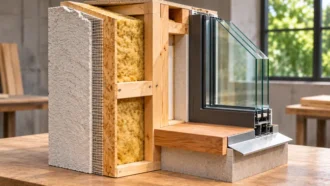
- Window technologies
- Ventilation and HVAC
- Acoustics
Course Completion
Job Outlook
These skills fit sustainable architecture, building performance analysis, lighting design and energy consulting.
Good for: Architecture students and designers who want to base decisions about energy and daylight on analysis.
Keep in mind: From fall 2018. Labs rely on specific simulation tools such as DIVA and ArchSim, which may need licenses and may have changed. You get notes and assignments, but no videos.
Bottom line: A practical, design-minded course whose assignments show how to think about a building’s performance early on.
Frequently Asked Questions
What software does the class use?
DIVA for shading, daylight and glare studies, ArchSim for solar simulations, and the CBE Comfort Tool in the session on thermal comfort. Software setup comes in week one.
What is the simulation game?
A building optimization exercise, like a sustainable design charrette, where teams compete for the lowest energy use within a set cost budget.
Does it cover acoustics?
Yes, near the end. Two guest lectures introduce building acoustics and sound attenuation, after the sessions on lighting and heat flow.
User Reviews
Write your review
You must be logged in to post a review.
Reviews can only be posted by registered learners. Log in or create a free account, then you will return here to post.


There are no reviews yet.