
Introduction to Building Technology
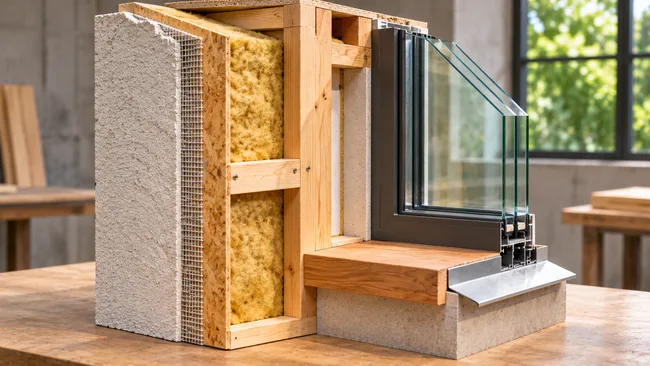
Course facts
- Payment: Free, no certificate
- Credits: Non Credit
- Learning style: Self-paced, start anytime
- Resources: Exams; Image Gallery; Lecture Notes; Problem Sets
MIT OpenCourseWare details
- As taught in: Spring 2006
- Department: Architecture

| Course Details | ||||||
|---|---|---|---|---|---|---|
|
||||||
| Outcomes | ||||||
|
||||||
| Price & Terms | ||||||
|
||||||
| Technical | ||||||
|
||||||
| Specification | ||||||
|
||||||

Building physics for architects: heat, air and moisture, natural and electric lighting, acoustics, and construction methods and materials.
A building has to keep its occupants warm, well lit and free of noise, and each of those needs rests on physics. This course introduces the physical processes behind the design of a building’s envelope, interior and equipment, and how to integrate technology into architecture. It brings scientific and mathematical calculation to bear on heat, air and moisture, on natural and electric light, and on sound, then surveys construction methods and materials, with a design project that analyzes a real building.
What You Will Achieve
- Calculate heat flow, air flow and condensation risk in a building
- Assess thermal comfort and the thermal balance of a space
- Design with natural and electric light for visual comfort
- Evaluate noise insulation and room acoustics
Program Overview
Thermal Aspects of a Building
Heat, air and moisture in buildings.
- Outside environment and human needs
- Heat flow, air flow and humid air
- Thermal comfort, insulation and condensation
- Climate-responsive design and passive controls
Lighting and Acoustic Aspects
Light and sound in the built environment.
- Photometry, vision and visual comfort
- Designing with natural light
- Sound, hearing and noise insulation
- Room acoustics
Construction Methods
Materials and building elements.
- Foundations and masonry
- Concrete, timber and steel
- Walls, openings, floors and roofs
Course Completion
Job Outlook
Building physics is used in architecture, building services engineering, sustainable design and energy consulting.
Good for: Architecture students who want a quantitative grounding in how buildings handle heat, light and sound.
Keep in mind: A spring 2006 course with lecture notes, seven homework sets, a quiz and examples of student design projects on specific buildings; the textbook by Szokolay is not included.
Bottom line: A well-structured introduction to building physics with strong worked examples from student projects.
Frequently Asked Questions
What does the design project involve?
Students chose a building and wrote a thermal balance report, a lighting and acoustics report and a final report, with student examples posted.
Which textbook is used?
Introduction to Architectural Science: The Basis of Sustainable Design by Steven Szokolay, with further reading from five other books.
Are the homework topics varied?
Yes. The seven homework sets cover solar radiation and climate, heat and air flow, comfort and condensation, photometry, daylighting, sound and room acoustics.
User Reviews
Write your review
You must be logged in to post a review.
Reviews can only be posted by registered learners. Log in or create a free account, then you will return here to post.



There are no reviews yet.