
Allergen Management Training
Course facts
- Payment: Free to learn, certificate paid
- Credits: CPD Credits
- Learning style: Self-paced, start anytime
- Format: Text & Interactive
- Video access: Offline Download (App)
- Refund: Conditional Refund

| Course Details | ||||||||
|---|---|---|---|---|---|---|---|---|
|
||||||||
| Languages | ||||||||
|
||||||||
| Outcomes | ||||||||
|
||||||||
| Price & Terms | ||||||||
|
||||||||
| Technical | ||||||||
|
||||||||
| Specification | ||||||||
|
||||||||

Learn to plan allergen controls, prevent cross-contact, label allergens accurately and handle recalls in food production.

Allergens behave differently from microbes, and even trace amounts of allergenic protein can slip into food through careless handling. The lessons look at how food businesses keep allergens out of the wrong products, declare them correctly on labels, check that cleaning works, and respond when an incident leads to a recall. Regulations such as EU 1169/2011 and FALCPA frame the daily practice discussed throughout.
What You Will Achieve
- Distinguish allergen cross-contact from microbial cross-contamination and spot where it can happen in production
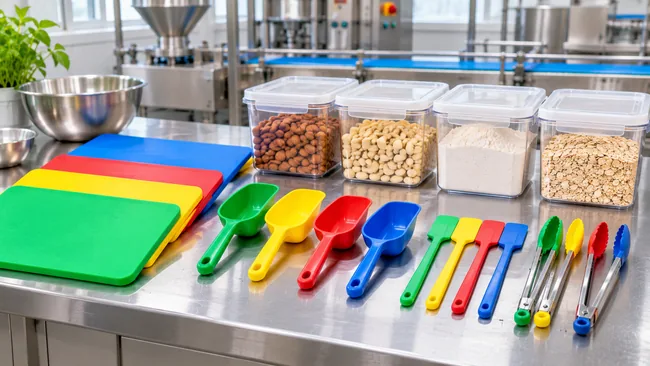
- Draft a written, risk-based plan with controls for suppliers, storage, color-coded tools and validated cleaning
- Write accurate ingredient declarations and precautionary “may contain” statements
- Run a root-cause analysis and CAPA after an allergen incident or recall
Program Overview
Food Allergens, Risks, and Labeling
Introduces what food allergens are, how an allergy differs from an intolerance, the symptoms of a reaction, and where allergens enter food production.
- Food allergens, intolerance and allergic reaction symptoms
- Allergen risks in food production
- Allergen identification and labeling
- EU 1169/2011 and FALCPA requirements
Allergen Control Plan and Cross-Contact Prevention
Sets out a risk-based control plan and the routine measures that keep allergens separated, with testing to confirm that cleaning has worked.
- Risk assessment and control measures
- Cross-contact prevention with segregated storage and color-coded tools
- Supplier and raw material management
- Allergen testing and verification
Incidents, Recalls, and Continuous Improvement
Looks at how staff are trained, how incidents and recalls are managed and communicated, and how audits and real cases support improvement.
- Training and communication
- Allergen incidents and recall management
- Auditing and continuous improvement
- Case studies and future trends in allergen management
Certificate Awarded (Paid)
Pass the course assessment to earn it. The course is free to study; the certificate is optional and has a fee.
Job Outlook
Allergen controls are part of daily work in food manufacturing, catering and food retail, especially in quality and food safety roles that deal with labels, cleaning checks and supplier approval.
- Food Scientist
- Food Science Technician
Good for: Food production, catering and retail staff, and quality managers who want a structured view of allergen controls, labeling rules and recall handling.
Keep in mind: Its legal content centers on EU 1169/2011 and US FALCPA, so check local rules elsewhere; allergen tests are studied online rather than run hands-on.
Bottom line: A well-ordered walk through allergen control that ties labeling law, cleaning verification and recall response to the written plan a food site keeps.
Frequently Asked Questions
Which allergen labeling laws does the course discuss?
The lessons refer to EU Regulation 1169/2011 and the US FALCPA rules, and show how they shape ingredient declarations and precautionary statements. Learners working under other national rules should check how their own requirements differ.
Which allergen tests are described in the lessons?
The course describes ELISA, PCR and lateral-flow tests as ways to verify cleaning and carry out rapid on-site checks. They sit within the testing and verification step of an allergen control plan.
How do GMP and HACCP fit into allergen control here?
Interactive activities show how GMP and HACCP principles work alongside allergen controls and predictive technologies to reduce cross-contact on production lines and to verify that sanitation has been effective.
What goes into an Allergen Control Plan?
The plan is risk-based and covers supplier approval, segregated storage, color-coded tools, validated cleaning, rapid on-site testing and documentation, with verification that the controls work.


There are no reviews yet.