
Diploma in Structural Engineering, Building Stability, and Site Safety
Course facts
- Payment: Free to learn, certificate paid
- Credits: CPD Credits
- Learning style: Self-paced, start anytime
- Format: Video Based
- Video access: Offline Download (App)
- Refund: Conditional Refund

| Course Details | ||||||||
|---|---|---|---|---|---|---|---|---|
|
||||||||
| Languages | ||||||||
|
||||||||
| Outcomes | ||||||||
|
||||||||
| Price & Terms | ||||||||
|
||||||||
| Technical | ||||||||
|
||||||||
| Specification | ||||||||
|
||||||||

Learn how structures carry loads, how reinforced concrete work is staged and supported, and how to spot site hazards and structural distress early.

Structural work on a building site depends on knowing how loads travel through beams, columns and foundations, and how a slip in reinforcement, formwork or concrete placement can turn into a collapse. The lessons connect structural theory with daily site safety: reading drawings and design intent, preparing reinforced concrete elements, supporting fresh concrete while it sets, and spotting hazards and signs of structural distress before they cause harm.
What You Will Achieve
- Identify the loads acting on a structure and read structural drawings to connect design intent with safety decisions on site
- Check that reinforcement is placed correctly in beams, slabs, columns and staircases before concrete is poured
- Set up temporary works safely and follow the right sequence for removing supports after the concrete sets
- Spot structural hazards and early signs of distress, carry out quality inspections, and respond correctly to site emergencies
Program Overview
Structural Loads, Drawings, and Design Intent
How structures carry loads, and how drawings and design intent guide each stage of structural work on site.
- Loads, forces, and load transfer through beams, columns, and foundations
- Bending, shear, and lateral stability systems
- Structural drawings, revisions, and safety margins
- Substructure and superstructure stages and coordination checks
Reinforcement, Temporary Works, and Concrete Casting
Preparing and reinforcing concrete elements, then supporting, placing, and curing the concrete until supports can come out safely.
- Reinforcement in beams and slabs
- Columns, walls, staircases, and landings
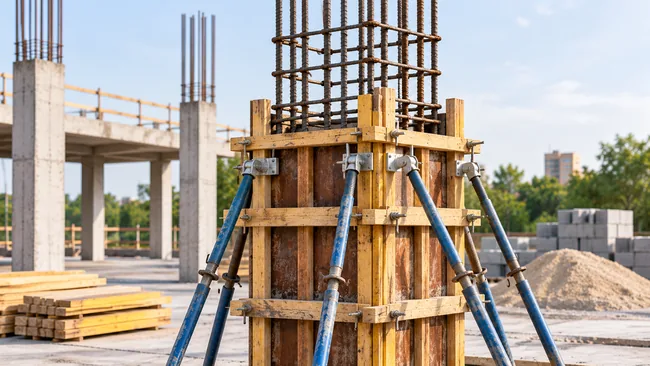
- Formwork, props, and concrete placement
- Vibration, curing, post-pour support, and stripping
Site Hazards, Inspection, and Emergency Response
Recognizing risks in structural work areas, controlling them, checking work quality, and responding when a structure shows distress.
- Collapse, falling object, and material-handling hazards
- Planned protection measures and site roles
- Inspection, quality control, and non-conformance control
- Unsafe conditions, structural distress, and post-incident follow-up
Certificate Awarded (Paid)
Pass the course assessments to earn it. The course is free to study; the certificate is optional and has a fee.
Job Outlook
These skills apply on construction sites where concrete structures are built, supervised, and inspected, including structural design teams, site supervision, and the concrete trades that place and finish the work.
- Structural Engineer
- Cement Mason
- Concrete Finisher
Good for: Construction workers, site supervisors, and safety staff who want to understand how structures behave and how concrete work is carried out safely on site.
Keep in mind: It is taught online, so reinforcement checks, formwork, and inspections still need supervised practice on a real site; its certificate is a certificate of completion, not an engineering license.
Bottom line: Its value lies in tying structural theory to concrete site work, following a pour through reinforcement, formwork, stripping, and the inspections that come after.
Frequently Asked Questions
How was the course text written and checked?
The content was built in partnership with Tyler Honor, a Certified Safety Professional. The authors drafted the text with help from ChatGPT, then they and subject matter experts reviewed, edited, and revised it for accuracy.
Does the diploma make me a Certified Safety Professional?
No. The Certified Safety Professional title belongs to the subject matter expert who helped create the content. Finishing this diploma earns the course's own certificate of completion, which is not a professional safety or engineering credential.
Which concrete elements do the reinforcement lessons cover?
They look at horizontal elements such as beams and slabs, vertical elements such as columns and walls, and transition elements such as staircases and landings, with attention to safe load transfer and preventing hidden defects.
What does the course teach about work after a pour?
It covers vibration and curing to protect fresh concrete, post-pour support, and the procedures for stripping formwork and removing props once the concrete has set, so supports come out safely and in the right order.



There are no reviews yet.