
Electronic Feedback Systems
Course facts
- Payment: Free, no certificate
- Credits: Non Credit
- Learning style: Self-paced, start anytime
- Resources: Lecture Videos; Open Textbooks; Problem Set Solutions; Problem Sets
MIT OpenCourseWare details
- As taught in: Spring 2013
- Department: Electrical Engineering and Computer Science

| Course Details | ||||||
|---|---|---|---|---|---|---|
|
||||||
| Outcomes | ||||||
|
||||||
| Price & Terms | ||||||
|
||||||
| Technical | ||||||
|
||||||
| Specification | ||||||
|
||||||

Twenty 1985 video lectures on classical feedback: stability, root locus, compensation, op amps, oscillators and phase-locked loops, with problem sets.
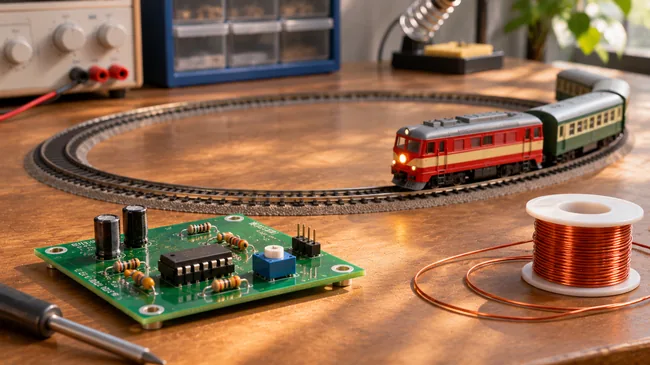
Twenty recorded lectures by Prof. Roberge condense a classic subject: how feedback makes electronic and electromechanical systems better behaved. The series works through stability, root locus and compensation, then applies them to operational amplifiers, oscillators and phase-locked loops. Demonstration systems ground the analysis, and the last lecture controls the speed of a model train.
What You Will Achieve
- Explain how feedback affects noise and nonlinearities
- Judge stability with root locus and frequency response methods
- Compensate a feedback loop, including an operational amplifier
- Analyze nonlinear systems with linearization and describing functions
Program Overview
Basic Concepts and Stability
The opening lectures set out what feedback does and when it fails.
- Effects of feedback on noise and nonlinearities
- Systems with dynamics
- Stability
- Root locus
Compensation
A long middle section shapes loops to meet a specification.
- Stability via frequency response
- Compensation and a worked example
- Feedback compensation
- Operational amplifier compensation
Nonlinear Systems and Applications
Later lectures go past linear analysis and end on circuits that use these ideas.
- Linearized analysis and describing functions
- Conditional stability
- Intentional oscillators and phase-locked loops
- Model train speed control
Course Completion
Job Outlook
Classical feedback analysis supports work in analog circuit design, power electronics, instrumentation and control engineering.
Good for: Electrical engineers and students with circuit analysis behind them who want classical feedback explained at a blackboard.
Keep in mind: Recorded in 1985, so the video and hardware show their age, though the mathematics has not changed. This is a condensed series, not a full term of a class.
Bottom line: An old recording that holds up, since the analysis has not aged and the demonstration systems keep it concrete.
Frequently Asked Questions
How old are the lectures?
Prof. Roberge gave them in 1985. They are a condensed version of the feedback subject he taught at the time, and the page says the equivalent is still taught.
Does the series cover nonlinear systems?
Yes. Lectures 14 through 17 cover linearized analysis, describing functions and conditional stability, after the linear material is finished.
Is there a textbook with the videos?
The materials list an open textbook along with problem sets and solutions, so you can work through exercises beside the lectures.



There are no reviews yet.