
Energy, Environment, and Society: Global Politics, Technologies, and Ecologies of the Water-Energy-Food Crises
Course facts
- Payment: Free, no certificate
- Credits: Non Credit
- Learning style: Self-paced, start anytime
- Resources: Projects; Written Assignments
- Before you start: None
MIT OpenCourseWare details
- As taught in: Spring 2018
- Department: Science, Technology, and Society

| Course Details | ||||||
|---|---|---|---|---|---|---|
|
||||||
| Outcomes | ||||||
|
||||||
| Price & Terms | ||||||
|
||||||
| Technical | ||||||
|
||||||
| Specification | ||||||
|
||||||

How politics, technology and experts shaped the water, energy and food crises, through case studies, essays and a communication project.
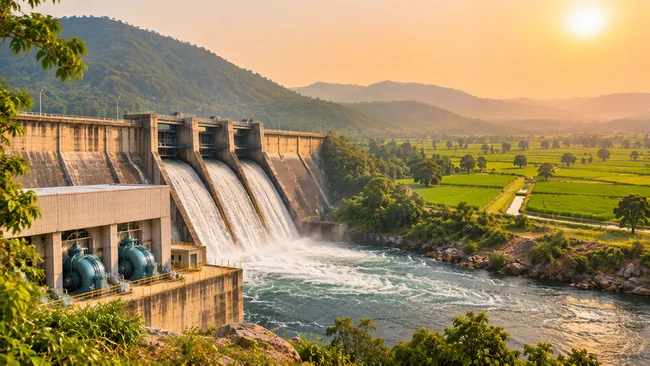
Supplying water, energy and food are deeply interrelated challenges, yet they are usually discussed as separate crises. Using case studies from Latin America, Asia, Africa, Europe and the United States, this course examines how politics, technology and experts shaped those links through the 20th century. Water sits at the center, along with the relationship between national developments and global change and the politics of policy-making and technological innovation.
What You Will Achieve
- Trace the social, political and technological history of the water-energy-food crises
- Evaluate historical sources by identifying their central arguments and perspectives
- Build a thesis argument supported by primary and secondary sources
- Translate an academic argument into a format non-expert audiences can follow
Program Overview
Assessing the Nexus
Framing the crises historically and in comparison.
- Linking environments, politics and societies
- Historically assessing the water-energy-food nexus
- Comparative environmental governance
Production Systems and Infrastructure
How food, fish, power and city water were organized.
- Irrigation and the Green Revolution
- Fishing industries and the Blue Revolution
- Power and hydropower
- Urban water infrastructure and waste management
Law, Justice and Governance
Who decides, who benefits and how policy changes.
- Water law, markets and neoliberalism
- Gender, race and water security
- Knowledge and science in environmental policy
- Environmental justice and global environmental governance
Course Completion
Job Outlook
The historical and policy analysis practiced here applies to work on environmental policy, sustainable development and environmental governance.
Good for: Readers of environmental policy and history who want to see water, energy and food as one connected problem, and to practice arguing from sources.
Keep in mind: The published materials are writing assignments and project guidance, not lectures. The session list gives the path through the topics, and the papers draw on readings and a class blog.
Bottom line: A strong writing-centered seminar on the history behind today’s resource debates, with an imaginative expert-report assignment.
Frequently Asked Questions
What is the expert report on Wakanda?
The second paper asks you to advise a fictional nation's interagency commission on integrating agriculture, animal husbandry and fisheries, drawing lessons from cases such as New England's fisheries or the Peruvian fishing industry.
What is the digital communication project?
It turns the final paper's academic argument into a format non-expert audiences can follow, such as a video, infographic, podcast or social media experiment. You choose the format and the target audience.
Which regions do the case studies cover?
The course description names case studies from Latin America, Asia, Africa, Europe and the United States, and the paper assignments ask you to analyze cases from countries or environmental conflicts of your choice.



There are no reviews yet.