
Introduction to Global Governance
Course facts
- Payment: Free to learn, certificate paid
- Credits: Non Credit
- Learning style: Self-paced, start anytime
- Format: Video Based
- Before you start: No prior knowledge is required
edX details
- Pacing: Self-paced
- Available until: Dec 15, 2026

| Course Details | ||||||||
|---|---|---|---|---|---|---|---|---|
|
||||||||
| Languages | ||||||||
|
||||||||
| Outcomes | ||||||||
|
||||||||
| Price & Terms | ||||||||
|
||||||||
| Technical | ||||||||
|
||||||||
| Specification | ||||||||
|
||||||||

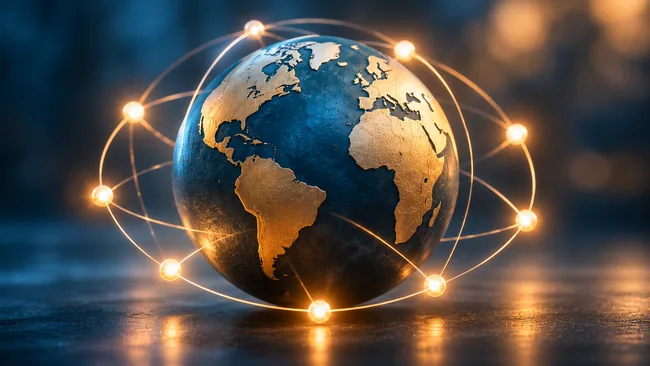
Learn who shapes global governance, how hard and soft law differ, and how the system handles pandemics, trade, space and human rights.
Global governance is the shared work of handling problems such as climate change, supply chains and cybersecurity, which cross national borders and draw in many actors and approaches at once. You meet the players involved, including national governments, the European Union, businesses and citizens, and see how informal, bottom-up processes have increasingly replaced traditional international law models. These ideas are then applied to pandemics, sustainable trade, outer space and human rights, and the course closes with the concepts used to analyze global governance, such as hard and soft law.
What You Will Achieve
- Explain what global governance means and how it pursues shared goals such as the Sustainable Development Goals
- Identify the actors behind a global problem, including intergovernmental bodies, regional organizations, businesses, citizens and multistakeholder initiatives
- Distinguish hard law, soft law, regulatory standards and voluntary commitments when reading how a challenge is managed
- Use concepts such as regime complexity to assess how a governance arrangement works in practice
Program Overview
Foundations and International Organizations
Why global governance is needed, how it has changed over time, and how states now make rules outside formal channels.
- Global challenges and the purpose of global governance
- How global governance has evolved
- The role of international organizations
- Why states turn to informal lawmaking
Regional and Non-State Actors
How regional bodies such as the EU and actors outside government take part in setting and meeting shared goals.
- The EU and the Sustainable Development Goals
- Setting and imposing regulatory standards
- Businesses and citizens in global governance
- Voluntary sustainability standards and multi-stakeholder initiatives
Governance in Practice and Analysis
Specific regimes put the concepts to work, followed by the theoretical tools used to study them.
- Sustainable trade, space and human rights regimes
- Health governance and the Covid-19 pandemic
- Hard law and soft law
- Regime architecture, complexity and actor interactions
Certificate Awarded (Paid)
Pass the final exam, which combines a quiz and a short essay, to earn it. The course is free to study; the certificate is optional and has a fee.
Job Outlook
The course builds a foundation for following and shaping global problems in policymaking, in businesses working with regulatory and sustainability standards, and in civic life as an informed citizen.
Good for: Learners who want a structured way to think about how states, the EU, businesses and citizens share the handling of cross-border problems.
Keep in mind: The regional material centers on the European Union, and the final exam asks for a short written essay as well as a quiz.
Bottom line: A conceptual course that pairs the actors and tools of global governance with cases such as pandemics, space and sustainable trade.
Frequently Asked Questions
How is the final exam structured?
The course closes with a final exam that combines a quiz with a short essay, so learners write about global governance in their own words as well as answering questions.
Which real governance cases does the course examine?
The cases are sustainable trade, outer space, human rights and health, with the Covid-19 pandemic as the health example. The regional material looks at how the EU promotes the Sustainable Development Goals.
What does the course say about informal international lawmaking?
The second part traces how international organizations have changed and why states increasingly make rules through informal processes instead of traditional international law, along with the reasons behind that shift.
Who funded the development of this course?
The course was funded by the European Union under its Horizon 2020 framework, and it is published by KU Leuven.
Please log in to report a problem with this page.




There are no reviews yet.