
Introduction to Rigging, Hoisting, and Material Handling
Course facts
- Payment: Free to learn, certificate paid
- Credits: CPD Credits
- Learning style: Self-paced, start anytime
- Format: Video Based
- Video access: Offline Download (App)
- Refund: Conditional Refund

| Course Details | ||||||||
|---|---|---|---|---|---|---|---|---|
|
||||||||
| Languages | ||||||||
|
||||||||
| Outcomes | ||||||||
|
||||||||
| Price & Terms | ||||||||
|
||||||||
| Technical | ||||||||
|
||||||||
| Specification | ||||||||
|
||||||||

Learn to choose and inspect lifting gear, check sling angles, use rigging hardware and knots, and direct a lift with hand signals.

Rigging and hoisting go wrong when a load is unstable, a sling sits at a poor angle or gear is pushed past its limits, and workers get hurt or equipment is damaged. You study the mechanical advantage behind a lift, the stress that sling angles place on a load, and how to choose and inspect hoists and rigging hardware before use. The care of hooks, clips and hitches, the hand signals that coordinate a lift, and the knots that secure a load are also part of the material.
What You Will Achieve
- Apply mechanical advantage principles when planning how to raise a heavy load.
- Check sling angles and stress points so a load stays balanced and stable.
- Choose a suitable lifting device for a job site task and inspect the gear before use.
- Use hand signals to direct a lift and keep everyone around it informed.
Program Overview
Lifting Principles and Hoisting Equipment
Opens with the basics of lifting and hoisting, then looks at how hoists and other lifting equipment are designed, how they work and how to use them safely.
- Fundamentals of lifting and hoisting
- Types of hoists and lifting equipment
- Equipment design, function and safety
Rigging Hardware and Attachments
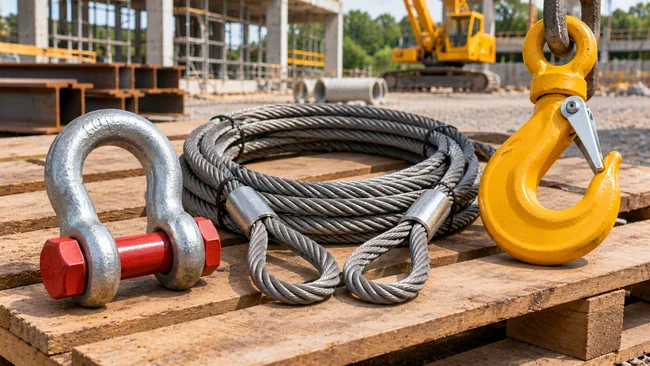
Covers the parts of rigging hardware and what each one does, with attention to how hooks, clips and hitches are used and kept in good condition.
- Rigging hardware components and uses
- Hooks, clips and hitches
- Care of rigging attachments
Lifting Communication, Knots, and Bends
Turns to how a team communicates during a lift and to the knots, bends and hitches used in rigging work.
- Communication during lifting and hoisting
- Hand signals for lifts
- Knots, bends and hitches
Certificate Awarded (Paid)
Pass the course assessment to earn it. The course is free to study; the certificate is optional and has a fee.
Job Outlook
Rigging and hoisting skills are used wherever heavy loads are moved, including construction sites, manufacturing plants, logistics operations and repair bays.
- Construction Site Supervisor
Good for: New workers in construction, manufacturing or logistics who need a grounding in lifting gear, sling angles and hand signals before working near hoisting operations.
Keep in mind: The lessons are video only, so the lifts, knots and hand signals still need practice under supervision with real gear before you work on a hoisting operation.
Bottom line: Pairs the mechanics of a lift, including mechanical advantage and sling angles, with lessons on rigging hardware, knots and hand signals.
Frequently Asked Questions
Will this course make me a certified rigger?
No. Passing the course assessment earns a certificate of completion that records this online training. It is not a rigger qualification, so check what your employer or local regulator requires before you work on lifts.
How does the course handle signaling during a lift?
One lesson covers communication during lifting and hoisting, including the correct hand signals for lifting operations and how a team coordinates a lift on the job site.
Does the course cover inspecting gear before a lift?
Yes. It explains how to select and inspect hoisting and rigging equipment before use, and a separate lesson deals with the use and care of hooks, clips and hitches.




There are no reviews yet.