
Introduction to World Music
Course facts
- Payment: Free, no certificate
- Credits: Non Credit
- Learning style: Self-paced, start anytime
- Resources: Written Assignments
MIT OpenCourseWare details
- As taught in: Spring 2013
- Department: Music and Theater Arts

| Course Details | ||||||
|---|---|---|---|---|---|---|
|
||||||
| Outcomes | ||||||
|
||||||
| Price & Terms | ||||||
|
||||||
| Technical | ||||||
|
||||||
| Specification | ||||||
|
||||||

An introduction to ethnomusicology: how to listen to world music, with case studies from Tuva, Senegal, Bali, and local music scenes.
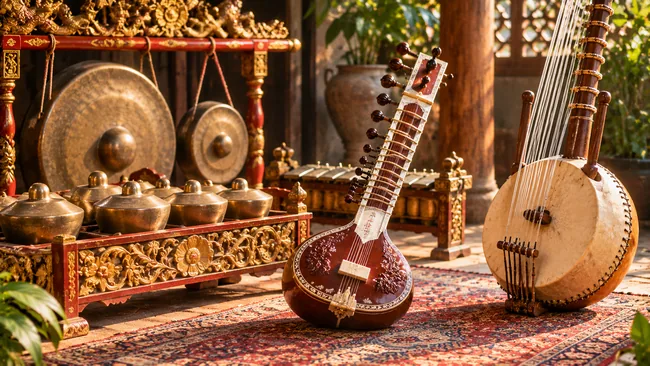
Listening to music from another culture means learning new ways to hear it, because different styles have different structures and meanings. This introduction to ethnomusicology studies musical traditions through soundscapes and case studies such as Tuvan throat singing, Senegalese sabar drumming, bagpipes and Balinese gamelan, then turns to music and dance through tango and Kathak, and to music in political life through national anthems, asking how music shapes and is shaped by its setting.
What You Will Achieve
- Describe music with a cross-cultural vocabulary of pitch, rhythm, quality, and intensity
- Explain how musical traditions are shaped by their cultural settings
- Write a personal musical ethnography and a musical analysis
- Plan an ethnographic research project on a local music scene
Program Overview
Soundscapes and the Materials of Music
What a soundscape is and how to describe what you hear.
- The concept of soundscapes
- Quality, pitch, rhythm, and intensity
- Local musics and ethnic communities
Music in Everyday Life and the Global Marketplace
Music through the life cycle, and how world music travels.
- Drumming and dance in Senegal
- Occasions of daily life and musical markers of the life cycle
- Materials, media, and the market for world music
- Composing and improvising world music in America
Music, Dance and Politics
Music joined to movement, and music as power and resistance.
- Music and dance: tango
- Kathak and Hindustani music
- Music in political life: national anthems
Course Completion
Job Outlook
Ethnographic listening and writing about music support work in music education, arts programming, cultural organizations, journalism and research in ethnomusicology and anthropology.
Good for: Music lovers and students of culture who want to learn how to listen to and write about traditions beyond their own.
Keep in mind: The published materials are the syllabus and the paper descriptions; the listening comes from the Soundscapes textbook and its audio, and the workshops and concerts were in person.
Bottom line: A case-study introduction to ethnomusicology, built around listening, participant observation, and writing about music.
Frequently Asked Questions
Which textbook and recordings does the course use?
The required text is Soundscapes: Exploring Music in a Changing World by Kay Kaufman Shelemay, second edition, which comes with three audio CDs. Some further listening and reading was assigned.
What are the writing assignments?
Four papers: a personal musical ethnography, a discussion of a concert, a musical analysis, and a final essay on a research or ethnographic project, with a guide to participant observation.
What is ethnomusicology?
The course presents it as a discipline that draws on and interacts with historical musicology, anthropology, sociology and cultural studies, and that treats music as a form of human expression.
Please log in to report a problem with this page.



There are no reviews yet.