
Making Books: The Renaissance and Today
Course facts
- Payment: Free, no certificate
- Credits: Non Credit
- Learning style: Self-paced, start anytime
- Resources: Image Gallery; Instructor Insights; Lecture Notes; Written Assignments with Examples
- Before you start: There are no prerequisites for this course.
MIT OpenCourseWare details
- As taught in: Spring 2016
- Department: History, Concourse

| Course Details | ||||||
|---|---|---|---|---|---|---|
|
||||||
| Outcomes | ||||||
|
||||||
| Price & Terms | ||||||
|
||||||
| Technical | ||||||
|
||||||
| Specification | ||||||
|
||||||

The history of the book from Gutenberg to 1800 and today’s media, taught through rare books and building a working printing press.
Was there a printing revolution in the Renaissance, and are we living through another media revolution today? This class studies the history of the book in Europe, examines books and prints from 1450 to 1800, and builds a functioning printing press based on Early Modern designs. Along the way it considers the parallels between print then and the changing media landscape now.
What You Will Achieve
- Trace the history of the book in Europe between Gutenberg and the French Revolution
- Examine an early printed book as historical evidence
- Compare the world of early print with media today
- Interpret trial documents on how one reader read
Program Overview
Paper, Manuscript and Print
The first weeks introduce the object and how it was made.
- Paper-making, manuscript, and print
- Book of Hours
- Nuremburg Chronicle
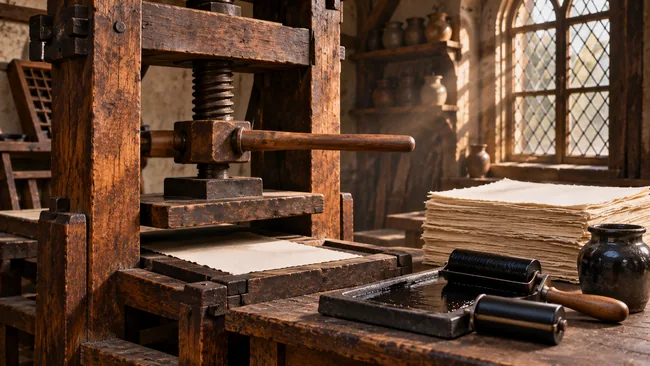
- Printing press construction session
Religion and Natural Philosophy
The middle weeks look at what early print carried.
- Religion in print
- Gutenberg Bible
- Print and natural philosophy
- Works of Galileo
Readers and Printers
The last weeks consider a reader and use the finished press.
- How a sixteenth-century Italian miller read
- Experimental printing on completed press
- Print your own text
Course Completion
Job Outlook
This study of print history supports further work in history, the humanities and the history of technology.
Good for: Humanities and engineering students who want to study the history of the book with attention to how it was physically made.
Keep in mind: The rare books and the press building happened at MIT and cannot be repeated. Materials include insights, notes, paper topics and student work, and a good deal of the value lay in the hands-on lab.
Bottom line: A hands-on view of humanities teaching, with insights for educators who want to build something in class.
Frequently Asked Questions
Did students really build a printing press?
Yes. In sessions at the MIT Hobby Shop, students designed and built a handset printing press based on Early Modern European designs, then printed their own text on it.
Which books are required?
Domenico Scandella Known as Menocchio, edited by Andrea Del Col, and The Cheese and the Worms by Carlo Ginzburg, with all other readings listed in the readings section.
What can teachers take from it?
Instructor insights discuss developing the class, using archival experiences, allaying educators' skepticism about hands-on humanities teaching, and the role of online fora.


There are no reviews yet.