
Physics of Rock Climbing
Course facts
- Payment: Free, no certificate
- Credits: Non Credit
- Learning style: Self-paced, start anytime
- Resources: Lecture Notes; Projects with Examples
MIT OpenCourseWare details
- As taught in: Spring 2006
- Department: Experimental Study Group

| Course Details | ||||||
|---|---|---|---|---|---|---|
|
||||||
| Outcomes | ||||||
|
||||||
| Price & Terms | ||||||
|
||||||
| Technical | ||||||
|
||||||
| Specification | ||||||
|
||||||

A seminar on open physics questions in climbing: fall arrest, rope behavior and karabiner gates, leading to small student research projects.
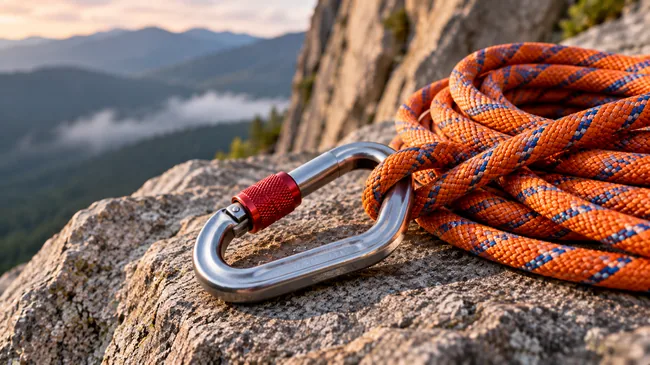
Could a falling climber’s rope shake a karabiner gate open? That question drove this small seminar, which teaches research by way of a sport’s unsolved problems. Sessions survey fall arrest, rope behavior and equipment ratings. Students then model, measure or test something themselves, and no climbing experience is expected or taught.
What You Will Achieve
- Explain force and energy in a climbing fall
- Estimate natural frequencies of ropes and karabiner gates
- Define and scope a small engineering research project
- Present results and write a research report
Program Overview
Open Questions
The seminar opens by mapping what climbers do not yet know.
- Open questions in rock climbing
- Fall arrest and the Wexler equation
- Rope behavior
- Equipment ratings
Karabiner-Rope Coupling
One question is then worked through in class.
- Natural frequencies of gates and ropes
- Measuring rope oscillation
- Spring constant of a karabiner
Student Projects
The rest of the term belongs to students’ own research.
- Project definition
- Modeling gate opening
- Rope marking ink and nylon
- Report writing workshop
Course Completion
Job Outlook
It offers a first taste of experimental engineering research, useful for anyone considering mechanical engineering or equipment design.
Good for: Curious students who like physics and climbing and want a first taste of open-ended research.
Keep in mind: This is not climbing instruction or safety advice. From spring 2006, it has lecture notes for only the first six sessions, after which the class focused on individual projects.
Bottom line: A charming example of research in miniature: one odd question, chased properly, with a real measurement at the end.
Frequently Asked Questions
Will it teach me how to climb?
No. The seminar explicitly leaves out climbing instruction, and it is not safety advice, so treat its experiments as physics and not as guidance for using gear.
What projects did students do?
A model and a measurement of karabiner gates opening from rope oscillation, and a study of how marking ink affects nylon fibers.
What did they find about the gate?
In class they measured a karabiner's spring constant and estimated a gate oscillation frequency of about 25 Hz, which became a starting point for the projects.


There are no reviews yet.