
Principles of Radiation Interactions
Course facts
- Payment: Free, no certificate
- Credits: Non Credit
- Learning style: Self-paced, start anytime
- Resources: Exams; Lecture Notes; Problem Sets
MIT OpenCourseWare details
- As taught in: Fall 2004
- Department: Nuclear Science and Engineering, Health Sciences and Technology

| Course Details | ||||||
|---|---|---|---|---|---|---|
|
||||||
| Outcomes | ||||||
|
||||||
| Price & Terms | ||||||
|
||||||
| Technical | ||||||
|
||||||
| Specification | ||||||
|
||||||

How radiation affects living systems: energy deposition, DNA damage, cell survival, radiation therapy, low doses, protection and space.
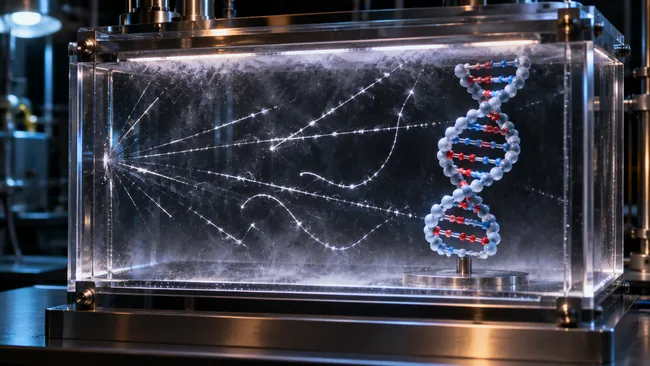
Why do different types of radiation have such different biological effects? This course studies how radiation deposits energy, including secondary radiations, and what that does to DNA, cells and whole mammalian systems. It goes on to radiation therapy, radiation syndromes in humans and carcinogenesis, with environmental sources on earth and in space, aspects of radiation protection, and examples from the literature.
What You Will Achieve
- Explain how radiation deposits energy in biological material
- Interpret dose response and cell survival curves
- Relate fractionation and tumor radiobiology to radiation therapy
- Assess risks from acute exposure, low doses and background radiation
Program Overview
Radiation Interactions and Damage
Energy deposition and its first effects.
- Radiation chemistry and LET
- Effects on chromosomes and DNA
- Clustered damage and RBE
Dose Response and Radiation Therapy
Effects on cells and tumors, and treatment.
- Cell survival curves
- Cell, tissue and tumor kinetics
- Tumor radiobiology
- Fractionation
Exposure, Protection and Space
Effects on people and how they are limited.
- Acute effects of whole body exposure
- Late effects and low doses
- Background radiation and radon
- Space
Course Completion
Job Outlook
This knowledge applies to work in radiation therapy, radiation protection and nuclear science.
Good for: Nuclear science and biomedical students who want a broad view of how radiation affects living systems.
Keep in mind: This 2004 course’s research and treatment examples are dated, so check them against current practice. Notes, problem sets and exams are published, but no solutions are listed.
Bottom line: A broad, well-organized grounding in radiation biology, from physics of interactions through clinical and space applications.
Frequently Asked Questions
Which textbook does it use?
Radiobiology for the Radiologist by Eric J. Hall, with references including Turner's Atoms, Radiation, and Radiation Protection and Alpen's Radiation Biophysics.
Does it cover radiation in space?
Yes. Two sessions near the end address space, alongside background radiation, radon and microbeams, and the course discusses environmental sources on earth too.
What materials can I use to practice?
Six problem sets and two exams are published along with the lecture notes. The class also ended with oral term paper presentations.



There are no reviews yet.