
Gastroenterology
Gastroenterology courses provide specialized medical training in the digestive system, focusing on the diagnosis and management of disorders affecting the esophagus, stomach, intestines, liver, and pancreas.
Read More
- Key Skills:
- Endoscopy and colonoscopy procedures, management of GERD and IBD, liver disease (hepatology) assessment, nutritional therapy, colorectal cancer screening, interpretation of GI motility studies.
Navigating the Alimentary Canal
Gastroenterology is a procedure-heavy specialty that addresses some of the most common complaints in medicine, from heartburn to abdominal pain. Education in this field combines detailed physiology with technical skill. Learners study the mechanics of digestion and absorption, understanding how the breakdown of the gut microbiome contributes to systemic health. A significant portion of training is dedicated to endoscopic techniques, where clinicians learn to use flexible cameras to visualize the gut lumen, biopsy suspicious tissue, and remove polyps before they become cancerous.
The field is also deeply interconnected with Hepatology (liver disease) and nutrition. Courses cover the rising epidemic of Non-Alcoholic Fatty Liver Disease (NAFLD) and the management of viral hepatitis. You will also explore the complexities of Inflammatory Bowel Disease (Crohn’s and Ulcerative Colitis), learning to prescribe potent biologic therapies that suppress the immune system. With the gut often called the “second brain,” modern curricula also touch on the gut-brain axis, exploring how digestive health influences mental well-being. Whether performing a life-saving ERCP to unblock a bile duct or counseling a patient on a gluten-free diet for Celiac disease, the gastroenterologist’s role is pivotal to patient quality of life.
Who Should Enroll?
- Internal Medicine Residents: Physicians planning to sub-specialize in GI and Hepatology.
- Endoscopy Nurses: RNs working in procedural units who need to master the setup and assistance protocols for scoping procedures.
- Dietitians: Nutrition professionals seeking specialized knowledge in medical nutrition therapy for GI disorders like IBS and Celiac disease.
- Primary Care Physicians: Doctors looking to improve their management of common GI issues to reduce unnecessary referrals.
Enroll in a Gastroenterology course today to master the complex diagnostic and therapeutic skills needed to treat the body’s digestive engine.
Showing the single result
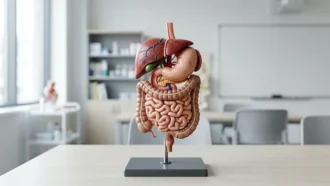
Frequently Asked Questions about Gastroenterology Courses
1. What procedures do Gastroenterologists perform?
Gastroenterologists are experts in endoscopy. The most common procedures are EGD (Upper Endoscopy) to examine the esophagus and stomach, and Colonoscopy to examine the large intestine. They also perform advanced procedures like ERCP (to treat bile duct issues) and endoscopic ultrasound.
2. What is "Hepatology"?
Hepatology is a sub-specialty within gastroenterology focused entirely on the liver, gallbladder, and biliary tree. Hepatologists manage conditions like Hepatitis B and C, liver cirrhosis, liver cancer, and supervise liver transplant evaluations. It is a critical field due to the prevalence of liver disease.
3. What is Inflammatory Bowel Disease (IBD)?
IBD includes Crohn’s Disease and Ulcerative Colitis—chronic autoimmune conditions that cause inflammation in the digestive tract. Courses teach the “step-up” and “top-down” approaches to treatment, using immunomodulators and biologics to induce and maintain remission.
4. Do these courses cover nutrition?
Yes, nutrition is fundamental to GI health. You will learn about Medical Nutrition Therapy for conditions like Celiac disease (gluten-free), Irritable Bowel Syndrome (low-FODMAP diet), and lactose intolerance. Understanding how food affects the gut is essential for non-pharmacological management.
5. What is the "Gut Microbiome"?
The gut microbiome refers to the trillions of bacteria living in the digestive tract. Modern courses explore how these microbes influence immunity, metabolism, and even mood. You learn about therapies like probiotics and Fecal Microbiota Transplantation (FMT) for treating C. diff infections.
6. Why is colon cancer screening so important?
Colorectal cancer is one of the most preventable cancers. Gastroenterologists perform colonoscopies to find and remove polyps (precancerous growths) before they turn into cancer. Courses emphasize the screening guidelines and techniques for safe polyp removal (polypectomy).
7. What is "GERD"?
GERD (Gastroesophageal Reflux Disease) is chronic acid reflux. It is one of the most common conditions treated. Courses cover the progression from simple heartburn to Barrett’s Esophagus (a precancerous change), and treatments ranging from proton pump inhibitors (PPIs) to surgical options.
8. Can I learn endoscopy online?
You can learn the anatomy and theory of endoscopy online, identifying pathology in images and videos. However, the physical skill of maneuvering the scope requires hands-on simulation training and supervised practice on real patients during a fellowship.
9. What is the role of GI nurses?
GI Nurses (or endoscopy nurses) play a vital role in procedural units. They prepare the patient, administer sedation (in some jurisdictions), assist the doctor with biopsies and snares during the scope, and monitor the patient’s recovery. Their specialized training is crucial for patient safety.
10. What is "Motility"?
GI Motility refers to the movement of food through the digestive tract. Disorders like Gastroparesis (delayed stomach emptying) occur when these nerves or muscles fail. Courses teach specialized tests like gastric emptying studies and esophageal manometry to diagnose these functional issues.