
Network Address Translation (NAT) by ArashDeljoo
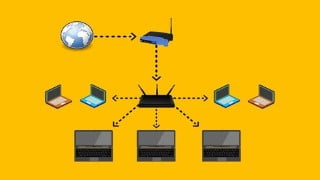

Learn how to configure Network Address Translation (NAT) for IP address conservation and connect private IP internetworks to the Internet. This course is ideal for network engineers seeking to enhance their skills in NAT configuration.
What you’ll learn
- Network Address Translation (NAT) Introduction
- Static Network Address Translation (NAT) Introduction
- Static Network Address Translation (NAT) Configuration
- Dynamic Network Address Translation (NAT) Introduction
- Dynamic Network Address Translation (NAT) Configuration
- Port Address Translation (PAT) Introduction
- Port Address Translation (PAT) Configuration
Network address translation (NAT) is a method of mapping an IP address space into another by modifying network address information in the IP header of packets while they are in transit across a traffic routing device. The technique was originally used to bypass the need to assign a new address to every host when a network was moved, or when the upstream Internet service provider was replaced, but could not route the network’s address space. It has become a popular and essential tool in conserving global address space in the face of IPv4 address exhaustion. One Internet-routable IP address of a NAT gateway can be used for an entire private network.
This course describes how to configure Network Address Translation (NAT) for IP address conservation and how to configure inside and outside source addresses. This course also provides information about the benefits of configuring NAT for IP address conservation.
NAT enables private IP internetworks that use nonregistered IP addresses to connect to the Internet. NAT operates on a device, usually connecting two networks. Before packets are forwarded onto another network, NAT translates the private (not globally unique) addresses in the internal network into legal addresses. NAT can be configured to advertise to the outside world only one address for the entire network. This ability provides more security by effectively hiding the entire internal network behind that one address.
Who this course is for:
- Network Engineers
User Reviews
Be the first to review “Network Address Translation (NAT) by ArashDeljoo”
You must be logged in to post a review.





There are no reviews yet.