
ORTHODONTIC PHOTOGRAPHY HANDS_ON COURSE
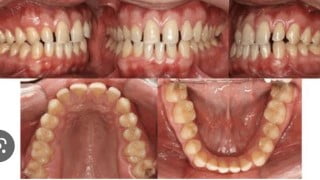

Learn how to incorporate clinical photography into your dental practice with this comprehensive course. Discover the benefits of using images for records, risk management, and patient education. Explore the role of intra-oral cameras and iPhones in clinical photography, as well as camera choices, accessories, and positioning techniques. Improve patient compliance and achieve quality, consistency, and efficiency in your dental photography. This course is ideal for orthodontic residents, postgraduate students, dentists, and BDS students. Start enhancing your clinical photography skills today.
What you’ll learn
- •Rationale for use – the scope of Clinical Photography – supporting and reinforcing treatment decisions and outcomes
- • Using images to improve records, risk management professional interactions and patient education
- Where do the Intra-oral camera and the iPhone fits into Clinical Photography?
- • Taking control of the camera to simplify and minimize adjustments.
- • Camera choices – body. lens and flash • Accessories – Retractors and mirrors • The team – who helps in taking photos? • Positioning and technique
- • Improving patient compliance • Data management • Achieving quality, consistency and efficiency
Photography has always been considered an invaluable part of dentistry. With the advent of digital technology, imaging has become easier and more readily accessible. Many practitioners, however, are still reluctant to implement photography in their practices for a variety of reasons including: (1) intimidation and lack of knowledge of photographic equipment and technique; (2) interruption in work flow; and, on rare occasion, (3) cost. Numerous articles have been published that outline equipment selection and photographic technique. Because new technology is continually emerging, equipment cost is always on the decline. And with practice and a little know-how, every practitioner can implement photography into his or her practice with minimal interruption in patient workflow.
As a clinician, it is mandatory for orthodontists to learn using a camera and to master clinical photography skills for the following reasons:
Documentation of records for medicolegal reasons
To compare pretreatment and posttreatment results
To document findings that may be unique and to share those findings with peers
For obtaining data to make presentations and teaching students
To use data in clinical practice for patient information and motivation
Mandatory requirements of certification examinations
What we learn today is because of the clinical photographs, we see in textbooks. These were available courtesy the efforts of those authors. The profession will be furthered, and our next generation will learn if each clinician as a torchbearer of the subject makes that the same effort.
The hallmark of great presentations or literature is often the consistency of the superior quality of the clinical photographs. Most orthodontic residency programs insist on honing photography skills. However, as a resident ventures into the world of clinical orthodontics, photography skills appear to be lost due to various reasons, namely, difficulty in carrying equipment at various centers, costs involved in purchasing equipment, lack of interest in documentation, etc. Fortunately, like any other habit, once motivated internally as a clinician, relearning those lost skills is just a matter of practice. More importantly, though DSLRs have overwhelming capabilities for orthodontic photography, one needs to learn only three controls (aperture, shutter speed, and International Standards Organization [ISO]). This article has been written to provide precise information relevant to clinical photography.
Course Outline
Rationale for use – the scope of Clinical Photography – supporting and reinforcing treatment decisions and outcomes
Using images to improve records, risk management professional interactions and patient education
Where do the Intra-oral camera and the iPhone fits into
Clinical Photography?Taking control of the camera to simplify and minimize adjustments.
Camera choices – body. lens and flash
Accessories – Retractors and mirrors
The team – who helps in taking photos?
Positioning and technique
Improving patient compliance
Data management
Achieving quality, consistency and efficiency
Who this course is for:
- Orthodontic Residents
- Postgraduate students
- Dentist
- BDS students
User Reviews
Be the first to review “ORTHODONTIC PHOTOGRAPHY HANDS_ON COURSE”
You must be logged in to post a review.



There are no reviews yet.