
Structure of Proteins

0
Certificate

Paid

Language

Level

Intermediate

Access

Free

Last updated on July 21, 2026 2:13 am

Learn the structure and functions of proteins with a focus on their purification and enzymes in this free online organic chemistry and biology course.

Add your review

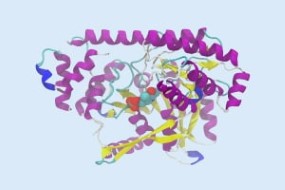
This free online biological chemistry course introduces you to the structure and functions of proteins. We take you through the hierarchical structure of proteins, the techniques used to determine their three-dimensional structure, their purification and the processes used for enzymes. This course offers entry into the fields of chemistry and biology and suits anyone interested in learning how the body fuels itself.

What You Will Learn In This Free Course

  • State the characteristics of the ?be…
  • Discuss the different hierarchical s…
  • List the important parameters for pr…
  • Describe the Ramachandran plot…
  • State the characteristics of the ?beta bend?
  • Discuss the different hierarchical structures of a protein or polypeptide
  • List the important parameters for protein purification
  • Describe the Ramachandran plot
  • Outline the property types on which protein purification can be based
  • Explain the functions of protein
  • Define an ?enzyme?
  • List the class of enzymes in the correct order as per their nomenclature system
  • Classify enzymes on the basis of cofactors
  • Discuss the derivation of the Michaelis-Menten equation
  • Recall the factors affecting enzyme-catalyzed reactions
  • Define ?proteases? and their types
  • User Reviews

    0.0 out of 5
    0
    0
    0
    0
    0
    Write a review

    There are no reviews yet.

    Be the first to review “Structure of Proteins”

    ×

      Your Email (required)

      Report this page
      Structure of Proteins
      Structure of Proteins
      LiveTalent.org
      Logo
      LiveTalent.org
      Privacy Overview

      This website uses cookies so that we can provide you with the best user experience possible. Cookie information is stored in your browser and performs functions such as recognising you when you return to our website and helping our team to understand which sections of the website you find most interesting and useful.