
Introduction to Ocean Science and Engineering
Course facts
- Payment: Free, no certificate
- Credits: Non Credit
- Learning style: Self-paced, start anytime
- Resources: Exam Solutions; Exams; Image Gallery; Problem Set Solutions; Problem Sets; Projects with Examples
- Before you start: MIT courses 8.01 and 18.02.
MIT OpenCourseWare details
- As taught in: Spring 2006
- Department: Mechanical Engineering

| Course Details | ||||||
|---|---|---|---|---|---|---|
|
||||||
| Outcomes | ||||||
|
||||||
| Price & Terms | ||||||
|
||||||
| Technical | ||||||
|
||||||
| Specification | ||||||
|
||||||

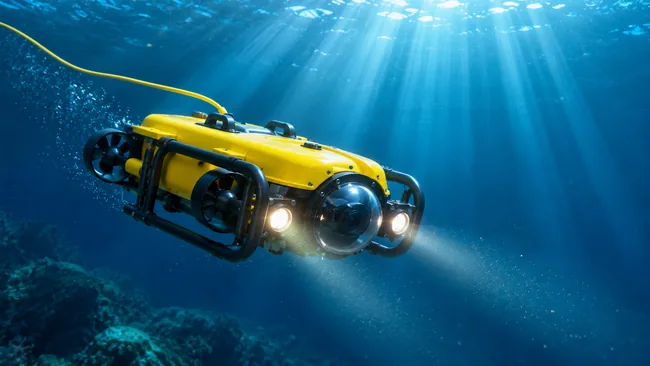
An introduction to ocean science and engineering: acoustics, ocean dynamics and sensors, with labs building a SeaPerch ROV.
Exploring and using the oceans takes physics, instruments and hands-on engineering together. This introduction covers seawater properties, light and sound propagation, acoustics, geophysical fluid dynamics and currents, with labs where students build a SeaPerch ROV and add sensors. The term also looks at deep ocean circulation, El Nino and tsunamis, and ends with a trip to launch the ROV.
What You Will Achieve
- Explain how light and sound propagate in the ocean
- Apply conservation laws to ocean fluid dynamics
- Describe Ekman forcing and geostrophic flows
- Build and test a sensor system on an underwater vehicle
Program Overview
Ocean Fundamentals
The first lectures describe what is out there.
- Sea floor
- Atmospheric effects on the ocean
- Ocean seawater properties
- Light propagation in the ocean
Acoustics and SeaPerch
The next part pairs sound with a build.
- Sound propagation in the ocean
- SeaPerch II ROV
- Field/pool test of SeaPerch II ROV
Ocean Dynamics
The last part looks at moving water.
- Coriolis force and Ekman forcing
- Geostrophic flows
- Deep ocean circulation
- El Nino and La Nina
Course Completion
Job Outlook
This introduction serves students heading into ocean engineering, marine science and related work with instruments in the field.
Good for: Science and engineering undergraduates who have taken physics and multivariable calculus and are curious about the sea.
Keep in mind: The ROV, labs, pool tests and trip are not available from the site, and only one of the two exams is published. Only some homeworks have solutions.
Bottom line: A hands-on first look at ocean engineering, with an ROV project and a required text that is free online.
Frequently Asked Questions
Is there a textbook to buy?
No. The required text, Introduction to Physical Oceanography by Robert Stewart, is freely available online, and other references appear in the readings section.
What was the final project?
Students developed a system tested and integrated with their ROV, gave final presentations and launched the vehicle on a trip to WHOI. Project examples are published.
Which guest lectures were given?
Two guest lectures were given, one on hydrothermal vents in the ocean and one on chemical sensing in the ocean.

There are no reviews yet.