
Marine Engineering
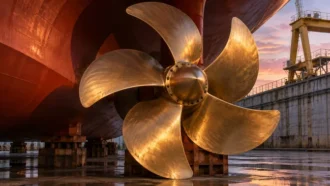
Marine Engineering courses navigate the complex mechanics of life at sea, teaching professionals to design, operate, and maintain the propulsion and support systems that power the global maritime fleet.
Read More
- Key Skills:
- Propulsion system design, naval architecture, fluid mechanics, hydraulics, marine electronics, corrosion control, safety management.
- Typical Duration:
- Most courses take 10–40 hours.
- Top Providers:
- MIT OpenCourseWare, SWAYAM
Powering the Blue Economy
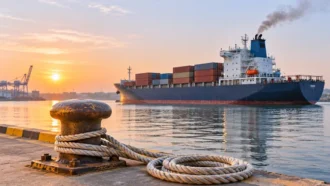
Marine Engineering is the technical backbone of global trade. With 90% of the world’s goods transported by sea, the reliability of shipping vessels is non-negotiable. Education in this field begins with the heart of the ship: the engine room. Learners study massive two-stroke and four-stroke diesel engines, gas turbines, and increasingly, dual-fuel systems. You will master the thermodynamics and mechanics required to keep these behemoths running in the middle of the ocean, thousands of miles from the nearest repair shop. The curriculum also covers auxiliary systems, such as desalination plants for fresh water, waste treatment, and HVAC, making a ship a self-sustaining floating city.
The industry is currently navigating a major transition toward decarbonization. Modern courses heavily emphasize “Green Shipping” technologies. You will explore alternative fuels like hydrogen, ammonia, and LNG, as well as wind-assist propulsion technologies. Digitalization is another key trend; “Smart Ships” require engineers who are comfortable with automation, sensor networks, and remote monitoring systems. Whether you are designing the hull of an autonomous cargo vessel or maintaining the drilling equipment on an offshore rig, the ability to solve complex technical problems in a harsh, corrosive environment is the hallmark of a marine engineer.
Who Should Enroll?
- Aspiring Seafarers: Individuals looking to become licensed Marine Engineering Officers working aboard commercial vessels.
- Naval Architects: Designers who need a deeper understanding of the mechanical systems that fit inside the hulls they draw.
- Offshore Technicians: Professionals working in the oil, gas, or wind energy sectors who need specialized knowledge of marine structures.
- Mechanical Engineers: Land-based engineers seeking to pivot their careers to the maritime industry.
Enroll in a Marine Engineering course today to master the machinery that moves the world and secure a career in a truly global industry.
Showing all 6 resultsSorted by latest
Frequently Asked Questions about Marine Engineering Courses
1. What is the difference between Marine Engineering and Naval Architecture?
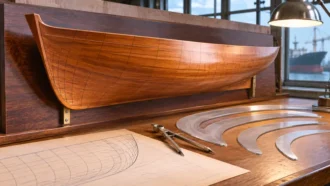
Naval Architecture focuses on the design of the ship’s hull, stability, and overall form (how it floats and moves through water). Marine Engineering focuses on the internal systems that make the ship function, such as the engines, pumps, electricity, and propulsion (how it runs). They work hand-in-hand but are distinct disciplines.
2. Do I need to go to sea to study Marine Engineering?
Not necessarily. While becoming a licensed Marine Engineering Officer requires “sea time” (on-board training), many shore-based roles in ship design, classification societies, and port operations do not. Academic degrees often focus on the engineering theory, while cadetships focus on the practical operation at sea.
3. What are the math requirements?
Marine Engineering requires a solid foundation in calculus and physics. You will need to calculate fluid pressures, heat transfer rates, and structural loads. While not as abstract as theoretical physics, the math is practical and essential for ensuring that systems can withstand the extreme forces of the ocean.
4. Will I learn about “Green Shipping”?
Yes, sustainability is the biggest topic in the industry right now. Courses cover the regulations (like IMO 2020) that limit sulfur emissions and the engineering behind scrubbers, ballast water treatment systems, and alternative fuels. Learning these technologies is critical for future-proofing your career.
5. What is “Offshore Engineering”?
Offshore Engineering is a specialization focused on stationary structures like oil rigs and wind farms, rather than moving ships. It involves specific challenges like anchoring systems, subsea pipelines, and wave dynamics. Many marine engineering principles apply, but the context is focused on stability in a fixed location.
6. What software is used in this field?
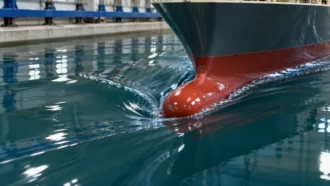
You will likely use CAD software like AutoCAD or Rhino for design. For analysis, Computational Fluid Dynamics (CFD) tools help simulate hull resistance. Specialized marine software like AVEVA Marine or NAPA is used for ship structural design and stability calculations.
7. Can I work on yachts with this qualification?
Yes, the “Superyacht” industry creates a high demand for marine engineers. These vessels require sophisticated engineering to manage not just propulsion, but also luxury amenities like stabilizers, pools, and complex AV systems. It is a lucrative niche that often allows for global travel.
8. What is a “Class Society” and why does it matter?
A Classification Society (like Lloyd’s Register or DNV) establishes and maintains technical standards for the construction and operation of ships. Courses teach you about “Class Rules” because every commercial ship must be built and surveyed according to these standards to be insured and allowed to sail.
9. How does automation affect Marine Engineering?
Automation is leading to “Unmanned Surface Vessels” (USVs). Engineers are now learning to maintain and monitor ships remotely from shore-based control centers. This shifts the job from fixing engines with a wrench to diagnosing software and sensor issues, requiring more IT and control systems knowledge.
10. What are the career prospects?
Career prospects are excellent due to a global shortage of qualified officers and engineers. You can work at sea (tax-free in many jurisdictions) or on shore in shipyards, consultancies, or government agencies. The skills are also transferable to power plants and facilities management on land.