
Architectural Design, Level I: Perceptions and Processes
Course facts
- Payment: Free, no certificate
- Credits: Non Credit
- Learning style: Self-paced, start anytime
- Resources: Design Assignments with Examples
MIT OpenCourseWare details
- As taught in: Fall 2003
- Department: Architecture

| Course Details | ||||||
|---|---|---|---|---|---|---|
|
||||||
| Outcomes | ||||||
|
||||||
| Price & Terms | ||||||
|
||||||
| Technical | ||||||
|
||||||
| Specification | ||||||
|
||||||

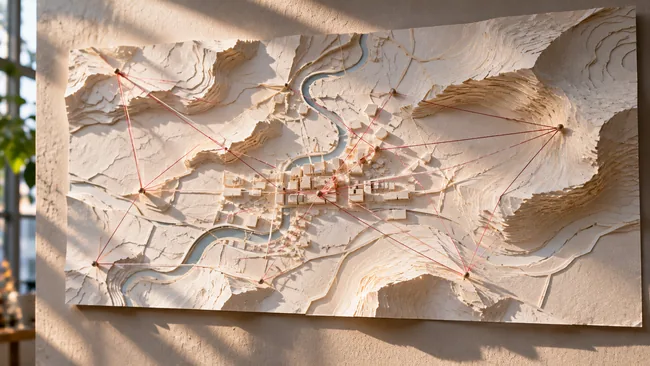
A first-level architecture studio on maps, drawing and perception, with six design problems, site-specific projects and student work.
What does a map do beyond representing a place? This first-level architecture studio explores the in-between: intervention and perception, representation and notation, the fixed and the temporal. Students begin with collective, site-specific drawing, build devices for drawing at full scale, and study minimalist works on a field trip. They then design a rooftop installation in Manhattan and a center on a marginal Boston site.
What You Will Achieve
- Use drawing as a device for recording a site
- Build and test a drawing instrument at one-to-one scale
- Develop an architectural proposal through models and sections
- Present design work at critical reviews
Program Overview
Drawing as a Device
Early exercises in notation and tools.
- Serial notations and drift drawings
- Recording device: drawing on the city
Roof eScape
A proposal on a site in Manhattan.
- Field trip to DIA Beacon
- Rooftop at DIA Chelsea
- Site inventory
- Mapping instrument and model
Land Form Processes Center
The final project at the end of Fort Point Channel.
- Concept models
- Site sections and sectional models
- Mid-review and final review
Course Completion
Job Outlook
This studio work is a foundation for further architectural education and design practice.
Good for: Architecture students and studio teachers looking for conceptual design problems and examples of student solutions.
Keep in mind: Studio learning depends on desk critiques and reviews, which you will not have. Its problems are tied to specific sites in New York and Boston as they stood in 2003, so adapt them.
Bottom line: An imaginative studio brief, useful as a source of problems and examples of student work.
Frequently Asked Questions
What are the design problems?
Six major assignments: serial notations and drift drawings, a recording device, Roof eScape, a site inventory, a mapping instrument or model, and the Land Form Processes Center.
What is the rooftop problem?
Students displace Dan Graham's installation on the DIA Chelsea rooftop and propose a new architectural installation or device that re-frames the contemporary urban experience.
Are student examples available?
Yes. Compilations of student solutions are provided for most of the problems, each credited to the student who made it and used with permission.


There are no reviews yet.