
Introduction to Architecture & Environmental Design
Course facts
- Payment: Free, no certificate
- Credits: Non Credit
- Learning style: Self-paced, start anytime
- Resources: Image Gallery; Written Assignments with Examples
MIT OpenCourseWare details
- As taught in: Spring 2014
- Department: Architecture

| Course Details | ||||||
|---|---|---|---|---|---|---|
|
||||||
| Outcomes | ||||||
|
||||||
| Price & Terms | ||||||
|
||||||
| Technical | ||||||
|
||||||
| Specification | ||||||
|
||||||

Architecture and environmental design across scales: the human body, villas, civic buildings, neighborhoods, cities and landscapes, with design exercises.
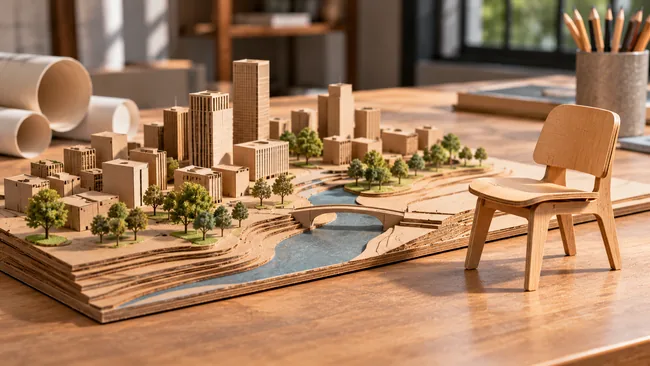
Design works at every scale: a single object, a building, a neighborhood, a city and a whole territory. This introductory studio course explores the design of the environment across those scales, taking in architecture, urbanism and landscape alongside the arts and sciences. Sessions move through the human and post-human scale, domestic villas, civic monumentality, the urban project, the city and regional landscapes, while three exercises develop spatial representation through drawings and models.
What You Will Achieve
- Analyze designs at every scale, including objects, buildings, cities and regions
- Use projection and drawing to represent space at different scales
- Apply architectural design methods to solve spatial problems
- Develop design ideas through drawings and physical models
Program Overview
The Human Scale
Design at the size of the body and the object.
- A trans-scalar practice, objects to earth
- The human scale: Bauhaus and the Eameses
- The post-human: Fuller, Archigram and Cedric Price
Buildings and Neighborhoods
Domestic and civic architecture and the urban project.
- The domestic scale: villas
- The civic scale: bigness and monumentality
- The neighborhood and the urban project
The City and the Region
Landscape and design at the largest scales.
- The city as a granite garden
- The regional scale and manufactured landscapes
Course Completion
Job Outlook
Environmental design thinking is used in architecture, urban design and planning, landscape architecture, interior and exhibition design, and design research.
Good for: Learners curious about architecture and design who want to think about space at every scale and try design exercises themselves.
Keep in mind: The materials are exercise briefs and examples of student drawings and models, with no lecture notes or videos; the woodshop visit and the guest lectures were in person.
Bottom line: A thoughtful studio introduction to architecture that trains you to design across scales.
Frequently Asked Questions
What are the design exercises?
Three exercises: proportions and rhythm, and transparency, at the human scale, then tectonic movement at the architectural scale, each broken into smaller steps that lead to drawings and models.
Can I see examples of student work?
Yes. Sample work for every exercise is published, including measurement charts, wire representations, freehand pencil tracings, thread drawings and model photographs.
Who gave guest lectures?
Guest lecturer Anne Whiston Spirn spoke on the city as a granite garden, and Alan Berger on manufactured landscapes at the regional scale.


There are no reviews yet.