
Amorphous Materials
Course facts
- Payment: Free, no certificate
- Credits: Non Credit
- Learning style: Self-paced, start anytime
- Resources: Exam Solutions; Exams; Lecture Notes; Problem Sets
- Before you start: 3.024 Electronic, Optical and Magnetic Properties of Materials
MIT OpenCourseWare details
- As taught in: Fall 2015
- Department: Materials Science and Engineering

| Course Details | ||||||
|---|---|---|---|---|---|---|
|
||||||
| Outcomes | ||||||
|
||||||
| Price & Terms | ||||||
|
||||||
| Technical | ||||||
|
||||||
| Specification | ||||||
|
||||||

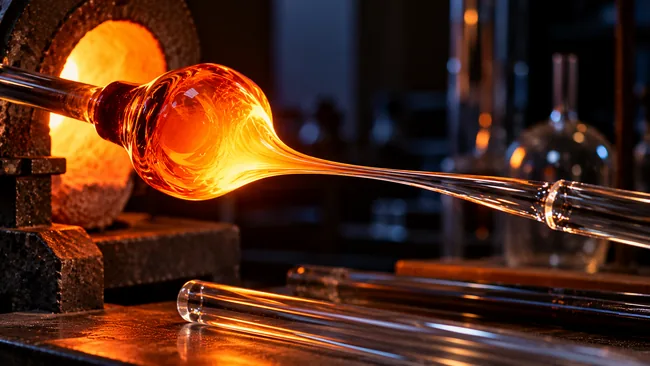
The science of glass and amorphous solids: glass formation, viscosity, strengthening, electrical and optical properties, applications.
Window glass, optical fibers and phase-change memory are all non-crystalline solids, and this course covers the materials science behind them. It looks at how amorphous solids form and the theories that explain glass formation, the classes of amorphous materials and their structures, viscosity, shaping, viscoelasticity and relaxation, mechanical properties and glass strengthening, electrical and optical properties, and the methods used to characterize the amorphous state, with applications in data storage, amorphous silicon electronics and waveguides.
What You Will Achieve
- Explain how amorphous solids form and compare the theories of glass formation
- Relate viscosity, viscoelasticity and relaxation to how glass is shaped
- Describe the mechanical properties of glass and how it is strengthened
- Connect amorphous structure to electrical and optical properties and their uses
Program Overview
The Amorphous State and Glass Formation
What amorphous solids are and how they form.
- Fundamentals of the amorphous state
- Classes of amorphous materials
- Glass forming theories
- Phase change data storage
Flow and Mechanical Behavior
How glass flows, is shaped, relaxes and breaks.
- Viscosity and glass shaping
- Viscoelasticity and relaxation
- Mechanical properties
- Glass strengthening
Electrical and Optical Properties
Amorphous materials in electronics and photonics, and how to study them.
- Electrical and transport properties
- Amorphous silicon macroelectronics
- Optical fibers and waveguides
- Characterizing the amorphous state
Course Completion
Job Outlook
Knowledge of glasses and amorphous materials is used in glass and ceramics manufacturing, photonics and optical fiber, display and electronics engineering, and materials research.
Good for: Materials science students who want to understand glass and other non-crystalline solids in depth.
Keep in mind: The problem sets have no solutions, though the midterm and final exams do; the guest lecture, glass lab demonstrations and final project presentations were in person.
Bottom line: A clear, applied tour of the science of glass and amorphous materials.
Frequently Asked Questions
What kind of final project does it set?
A report of about five pages and a short presentation on a question such as whether a glass box that cracked 1,353 feet up is still safe, metallic glass phone cases, or locking radioactive waste in glass.
Are there exam solutions?
Yes. Solutions are published for the midterm and the final exam, while the three problem sets come without solutions.
Does it cover glass in electronics?
Yes. Sessions treat phase change data storage, amorphous silicon macroelectronics, and optical fibers and waveguides.
User Reviews
Write your review
You must be logged in to post a review.
Reviews can only be posted by registered learners. Log in or create a free account, then you will return here to post.


There are no reviews yet.