
Materials Engineering
Materials Engineering courses immerse learners in the atomic architecture of the physical world, exploring how the structure of matter can be manipulated to create stronger, lighter, and more conductive substances.
Read More
- Key Skills:
- Crystallography, thermodynamics, failure analysis, phase diagrams, scanning electron microscopy (SEM), polymer synthesis, nanomaterial characterization.
- Top Providers:
- MIT OpenCourseWare, NPTEL+
Designing the Future, Atom by Atom
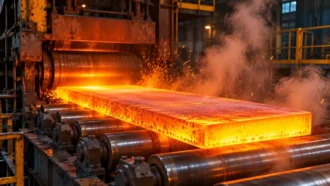
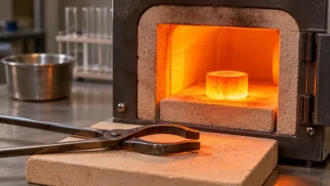
Materials Engineering courses provide a rigorous education in the stuff that makes up our universe. You will move beyond the visible surface of objects to understand the microscopic lattices and molecular chains that determine why steel is hard and rubber is elastic. The curriculum relies heavily on “Structure-Property Relationships,” teaching students how processing a material (like heat-treating metal) changes its internal structure and, consequently, its performance. You will study the four main classes of materials—metals, ceramics, polymers, and composites—learning to select the perfect candidate for extreme environments, from the vacuum of space to the inside of the human body.
Advanced professional learning modules engage with the cutting edge of “Nanotechnology” and “Biomaterials.” Students explore how manipulating matter at the nanoscale can create self-cleaning surfaces or targeted drug delivery systems. You will also grapple with “Sustainability,” analyzing the lifecycle of materials to design for recyclability and reduced environmental impact. A key real-world use case involves a materials scientist analyzing a fractured turbine blade to determine the root cause of failure, or a research engineer developing a new battery electrolyte to extend the range of electric vehicles. Graduates frequently pursue diverse job pathways as metallurgists, corrosion engineers, semiconductor process engineers, or forensic scientists, serving as the innovators who make modern technology physically possible.
Who Should Enroll?
- Mechanical Engineers: Professionals needing to understand the fatigue limits and thermal properties of the materials they specify for their designs.
- Product Designers: Creatives seeking to explore novel materials like shape-memory alloys to enable new product functionalities.
- Manufacturing Specialists: Experts responsible for troubleshooting production issues related to material defects or processing inconsistencies.
- Biomedical Researchers: Scientists looking to develop biocompatible implants and prosthetics that integrate seamlessly with living tissue.
- Sustainability Officers: Leaders tasked with replacing toxic or non-recyclable materials in their supply chain with greener alternatives.
Enroll in a Materials Engineering course today to master the building blocks of reality, gaining the scientific expertise to innovate at the most fundamental level.
Showing 1–12 of 20 resultsSorted by latest







Frequently Asked Questions about Materials Engineering Courses
1. How is Materials Engineering different from Mechanical Engineering?
While closely related, Mechanical Engineering focuses on the design of moving parts and systems (like engines or robots), whereas Materials Engineering focuses on the substances those parts are made of. Materials engineers answer questions like “Will this metal melt at high speeds?” or “Why did this plastic crack?”, providing the critical data that mechanical engineers need to build safe machines.
2. Do I need a background in chemistry?
Yes, a strong foundation in chemistry (and physics) is essential. You need to understand atomic bonding (covalent, ionic, metallic) and crystal structures to predict how materials will behave. However, introductory courses often review these chemical principles specifically through the lens of solid-state matter, making them accessible to engineers from other backgrounds.
3. What are “Smart Materials”?
Smart Materials are substances that react to changes in their environment, such as temperature, stress, or magnetic fields. Examples include shape-memory alloys that return to their original shape when heated, or piezoelectric materials that generate electricity when squeezed. Courses explore the applications of these materials in sensors and actuators.
4. Is Nanotechnology part of this field?
Yes, Nanotechnology is a massive sub-field of materials engineering. It involves manipulating matter at the scale of 1 to 100 nanometers. At this scale, materials often exhibit unique optical, electrical, or mechanical properties. You will study how to synthesize and characterize nanomaterials for uses in electronics, medicine, and energy.
5. What is “Failure Analysis”?
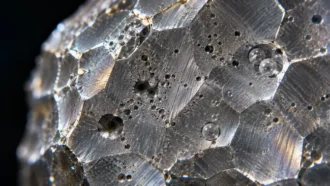
Failure Analysis is the forensic science of determining why a material or component broke. Was it fatigue? Corrosion? Overload? You learn to use tools like Scanning Electron Microscopes (SEM) to look at fracture surfaces and identify the “smoking gun.” This skill is critical for preventing future accidents and liability.
6. Can I work in the renewable energy sector?
Absolutely. Materials engineers are at the forefront of the green energy revolution. They develop more efficient silicon for solar panels, longer-lasting electrolytes for lithium-ion batteries, and lighter composites for wind turbine blades. Professional learning in this area focuses on “Energy Materials” and storage technologies.
7. What are “Composites”?
Composites are materials made from two or more constituent materials with significantly different physical or chemical properties (like Carbon Fiber Reinforced Polymer). When combined, they produce a material stronger or lighter than the individual components. You learn the complex manufacturing techniques required to lay up and cure these high-performance materials.
8. Is metallurgy still relevant?
Yes, metallurgy remains the backbone of modern infrastructure. Despite the rise of plastics, metals are still required for buildings, bridges, cars, and airplanes. Courses cover modern metallurgical advancements like “Superalloys” used in jet engines, which maintain their strength at incredible temperatures.
9. How does “Biomaterials” fit in?
Biomaterials is the study of natural or synthetic materials that interact with biological systems. This includes artificial hip joints, dental implants, and tissue engineering scaffolds. You learn about “biocompatibility”—ensuring the body doesn’t reject the material—and how to design surfaces that encourage cell growth.
10. What is “Corrosion Engineering”?
Corrosion Engineering focuses on preventing the degradation of materials due to environmental reactions (like rust). It is a multi-billion dollar problem for industries like oil and gas. Courses teach you about cathodic protection, coatings, and material selection strategies to extend the lifespan of infrastructure in harsh environments.