
Materials Processing
Course facts
- Payment: Free, no certificate
- Credits: Non Credit
- Learning style: Self-paced, start anytime
- Resources: Exam Solutions; Exams; Lecture Notes; Problem Set Solutions; Problem Sets
- Before you start: 3.012 Fundamentals of Materials Science; 3.022 Microstructural Evolution in Materials
MIT OpenCourseWare details
- As taught in: Spring 2013
- Department: Materials Science and Engineering

| Course Details | ||||||
|---|---|---|---|---|---|---|
|
||||||
| Outcomes | ||||||
|
||||||
| Price & Terms | ||||||
|
||||||
| Technical | ||||||
|
||||||
| Specification | ||||||
|
||||||

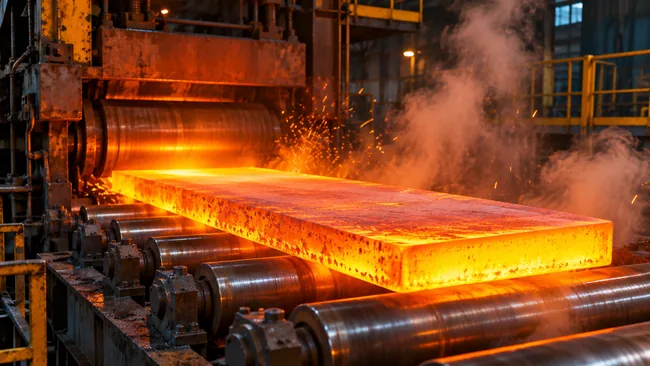
Analyze industrial processes such as glass, casting and steelmaking with heat transfer, solidification and fluid flow, plus solved exams from 2009 to 2013.
Why can’t you simply make glass or steel faster? This undergraduate class finds the physical limits on process speed and quality in heat transfer, diffusion and fluid flow. Analysis is applied throughout to real industrial processes, from float glass and hot rolling to sand casting and blow molding, ending with steelmaking and factory design.
What You Will Achieve
- Solve heat conduction problems using the Biot number
- Analyze solidification, including binary alloys
- Apply fluid flow and the Navier-Stokes equation to forming
- Identify what limits scale and speed in an industrial process
Program Overview
Heat Transfer
The class opens with the equation behind most of the analysis.
- Heat conduction equation
- Biot number and Newtonian cooling
- Thermal spray and hot rolling
- Friction welding and radiation
Solidification
Heat flow then meets a change of phase.
- Stefan condition
- Sand casting and lost foam
- Binary solidification
- Zone refining
Fluid Flow and Forming
Flow leads to shaping materials and whole plants.
- Navier-Stokes equation
- Pilkington glass process
- Blow molding and powder processing
- Steel factory design
Course Completion
Job Outlook
These tools apply directly in manufacturing, process engineering and materials roles across metals, glass, polymers and electronics.
Good for: Materials science and manufacturing students who want to reason about real plants using simple physics.
Keep in mind: From spring 2013, with no lecture videos of its own: the notes link to third-party factory clips that may have vanished. The video project has no solution, and course math builds on prior materials classes.
Bottom line: A rewarding, concrete course backed by solved exams from several years, making it excellent for self-study.
Frequently Asked Questions
How much exam practice is there?
Plenty. Exams with solutions are included from 2009, 2011, 2012 and 2013, along with five homework sets that also have solutions.
Which industrial processes are analyzed?
Glass fibers, thermal spray, hot rolling, friction welding, sand casting, single crystal growth, float glass, blow molding, powder processing and continuous steelmaking.
Are there videos?
Not lecture videos, though the notes point to outside clips of factories at work, such as float glass lines, and some of those links may no longer work.
User Reviews
Write your review
You must be logged in to post a review.
Reviews can only be posted by registered learners. Log in or create a free account, then you will return here to post.

There are no reviews yet.