
Molecular Principles of Biomaterials
Course facts
- Payment: Free, no certificate
- Credits: Non Credit
- Learning style: Self-paced, start anytime
- Resources: Exam Solutions; Exams; Lecture Notes; Problem Set Solutions; Problem Sets
MIT OpenCourseWare details
- As taught in: Spring 2006
- Department: Biological Engineering, Materials Science and Engineering

| Course Details | ||||||
|---|---|---|---|---|---|---|
|
||||||
| Outcomes | ||||||
|
||||||
| Price & Terms | ||||||
|
||||||
| Technical | ||||||
|
||||||
| Specification | ||||||
|
||||||

Designing biomaterials at the molecular scale: controlled release, hydrogels, cell recognition, bioceramics, drug carriers and vaccines.
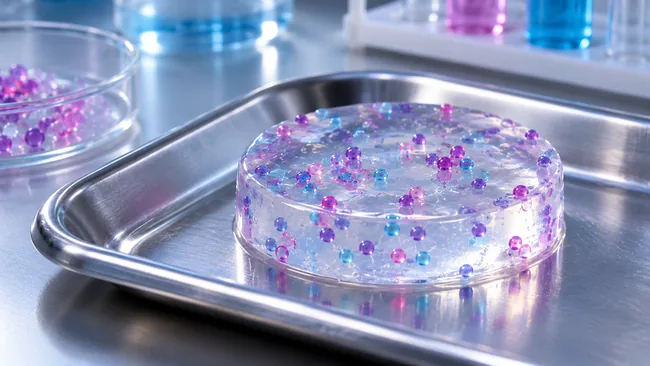
Materials used in contact with living systems can be designed at the molecular scale, and this class teaches how. It covers biodegradable polymers and controlled release, hydrogels, surfaces that guide cells, and bioceramics inspired by bone. Later lectures reach nanoparticle drug carriers and molecular devices, and a focus topic asks how biological knowledge can guide vaccine design.
What You Will Achieve
- Predict polymer degradation and controlled drug release
- Explain hydrogel swelling and applications
- Design surfaces that control cell recognition
- Compare nanoparticle carriers and vaccine delivery strategies
Program Overview
Polymers and Release
The first lectures treat degradable materials.
- Biodegradable polymeric solids
- Controlled release devices
- Hydrogels as biomaterials
Recognition and Minerals
The next lectures engage cells and tissue.
- Engineering biological recognition
- Bioceramics and biocomposites
- Molecular devices
Drug Carriers and Vaccines
The last lectures address delivery in the body.
- Nanoparticle and microparticle drug carriers
- Basic biology of vaccination
- DNA vaccines
Course Completion
Job Outlook
These skills serve biomedical engineering, drug delivery and tissue engineering in research and in industry.
Good for: Graduate students in biological engineering and materials science who want the chemistry behind biomaterials.
Keep in mind: No textbook is assigned, so you rely on the notes and primary literature. Its state-of-the-art examples date from when it was taught.
Bottom line: A detailed account of biomaterials design, with exams and solutions for testing yourself.
Frequently Asked Questions
Which reference books are suggested?
Biomaterials Science by Ratner and colleagues, Principles of Tissue Engineering by Lanza and colleagues, Drug Delivery by Saltzman, and Biomineralization by Mann, among others.
What practice is published?
Five problem sets with solutions and Exam 1 with solutions, along with the second exam problem and its bibliography.
How long does it spend on hydrogels?
Five lectures, on structure, swelling, physical gels, polyelectrolytes and applications such as molecular imprinting and glucose-sensitive drug delivery.



There are no reviews yet.