
Magnetic Materials
Course facts
- Payment: Free, no certificate
- Credits: Non Credit
- Learning style: Self-paced, start anytime
- Resources: Exam Solutions; Exams; Problem Set Solutions; Problem Sets
MIT OpenCourseWare details
- As taught in: Spring 2004
- Department: Materials Science and Engineering

| Course Details | ||||||
|---|---|---|---|---|---|---|
|
||||||
| Outcomes | ||||||
|
||||||
| Price & Terms | ||||||
|
||||||
| Technical | ||||||
|
||||||
| Specification | ||||||
|
||||||

Graduate study of magnetism: moments, anisotropy, domains, hard and soft materials and magnetic recording, with solved problem sets and sample exams.
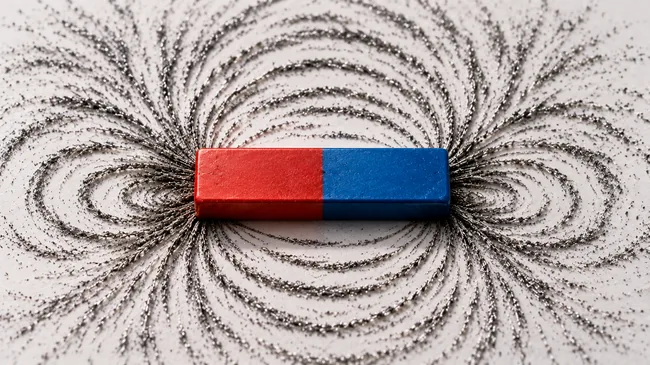
Why does one alloy hold its magnetism while another gives it up at once? This graduate class moves step by step through observing magnetic phenomena and explaining them at growing levels of sophistication. Magnetic behavior is set beside related effects in other materials, so ferromagnetism is compared with ferroelectricity, and spin alignment contrasted with superconducting spin pairing.
What You Will Achieve
- Calculate fields using classical magnetostatics
- Explain where magnetic moments come from
- Analyze anisotropy, domains and magnetization processes
- Compare hard, soft and amorphous magnetic materials
Program Overview
Origins of Magnetism
Classical and quantum explanations.
- Magnetostatics
- Spin and the anomalous Zeeman effect
- Exchange in insulators
- Bonding and magnetism
Magnetic Energies
What sets a material’s behavior.
- Magnetic and magnetoelastic anisotropy
- Domain walls and domains
- Lab work and its analysis
- Magnetization processes
Materials and Applications
Real materials and devices.
- Soft and hard magnetic materials
- Nanocrystalline materials
- Thin film magnetism and transport
- Magnetic recording
Course Completion
Job Outlook
These skills are relevant to materials research, magnetic device engineering and work on sensors or data storage.
Good for: Materials science and physics graduate students who want a structured route through magnetism, with lots of problems to practice on.
Keep in mind: It dates from 2004, so magnetic recording coverage is of that era. No lecture notes or videos are listed, so you will lean heavily on the O’Handley textbook.
Bottom line: A strong problem-based companion to its textbook, with solved problem sets and sample exams.
Frequently Asked Questions
What textbook is used?
Modern Magnetic Materials by O'Handley is the class text. Backup texts by Jiles, Cullity and Chikazumi are listed in increasing order of level.
What exams are available?
A 2004 midterm and sample exams from 2000 and 2002, all with solutions, alongside ten problem sets.
What did student projects look at?
Five samples are included, on ferromagnetic semiconductors, measuring spin polarization, magnetic refrigeration, tunneling magnetoresistance and a phase distribution model for FePd.



There are no reviews yet.