
Chemical and Biological Reaction Engineering
Course facts
- Payment: Free, no certificate
- Credits: Non Credit
- Learning style: Self-paced, start anytime
- Resources: Activity Assignments with Examples; Exam Solutions; Exams; Lecture Notes; Problem Set Solutions; Problem Sets
MIT OpenCourseWare details
- As taught in: Spring 2007
- Department: Chemical Engineering

| Course Details | ||||||
|---|---|---|---|---|---|---|
|
||||||
| Outcomes | ||||||
|
||||||
| Price & Terms | ||||||
|
||||||
| Technical | ||||||
|
||||||
| Specification | ||||||
|
||||||

Design chemical and biological reactors: rate laws, enzyme and cell kinetics, CSTR and plug flow, catalysis and transport, with full problem sets and solutions.
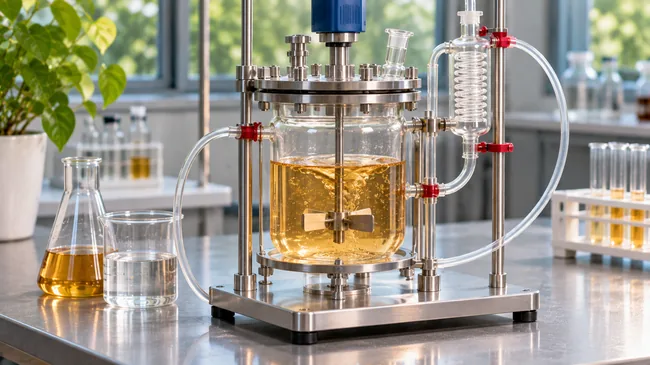
A chemical plant and a fermentor are designed by much the same logic. This class teaches both, deriving rate laws from mechanisms and enzyme and cell growth kinetics, then sizing batch, plug flow and stirred tank reactors. William Green and Dane Wittrup alternate between catalysts and living cells, ending on heat and mass transport.
What You Will Achieve
- Derive rate laws from reaction mechanisms
- Size and compare batch, plug flow and stirred tank reactors
- Model enzyme kinetics, cell growth and chemostats
- Account for diffusion and heat effects in catalysts and fermentors
Program Overview
Rates and Mechanisms
The opening sessions cover the language of kinetics.
- Reaction stoichiometry
- Rate laws and Arrhenius equation
- Michaelis-Menten enzyme kinetics
- Steady state approximation
Ideal, Real and Biological Reactors
Reactors are compared and combined, with living systems included.
- CSTR, batch and plug flow reactors
- Residence time distribution
- Non isothermal reactors
- Chemostats and fed batch operation
Catalysis and Transport
The last part looks at how transport limits reaction.
- Langmuir-Hinshelwood kinetics
- Oxygen transfer in fermentors
- Thiele modulus and effectiveness factor
- Packed bed reactors
Course Completion
Job Outlook
This is core training for chemical, biochemical and process engineering, in energy, chemicals, pharmaceuticals and bioprocessing.
Good for: Chemical engineering undergraduates, and biological engineers who want reactor design taught with cells included.
Keep in mind: From spring 2007, with no videos, and the notes are marked preliminary. The Fogler textbook is separate, some sets use MATLAB files, and the remote WebLab reactor cannot be run.
Bottom line: A complete, well-supported problem course that treats cells and catalysts side by side, with solutions to check your work.
Frequently Asked Questions
Which textbook does it use?
Elements of Chemical Reaction Engineering by Fogler, 4th edition. Several problem sets are assigned from it, so you will need a copy to do those.
What was the WebLab experiment?
Students watched a non-ideal stirred tank run at Cambridge University in real time, then analyzed the data. The pre-lab, post-lab and data files are included.
Is any software needed?
Some problem sets come with MATLAB files, such as a stability diagram script, so access to MATLAB or a similar tool helps.



There are no reviews yet.