
Chemical Engineering
Chemical Engineering courses provide the blueprint for industrial innovation, teaching learners how to scale chemical reactions from the laboratory bench to the manufacturing plant to produce energy, medicine, and materials.
Read More
- Key Skills:
- Thermodynamics, process design, mass and heat transfer, reaction engineering, fluid mechanics, Aspen Plus/HYSYS, process safety (HAZOP).
- Typical Duration:
- Most courses take 10–40 hours.
- Top Providers:
- SWAYAM, MIT OpenCourseWare, NPTEL+
From Test Tube to Tanker
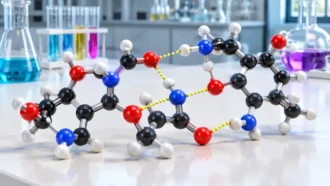
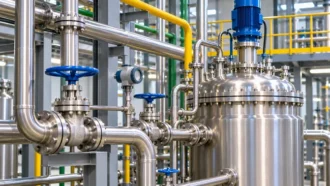
Chemical Engineering is often called the “Universal Engineering” because its principles apply to almost every physical product we use. While chemists discover new compounds in small vials, chemical engineers figure out how to make those compounds by the ton—safely, profitably, and efficiently. Education in this field starts with the “Material and Energy Balance,” the fundamental law that dictates nothing is created or destroyed, only transformed. Learners master thermodynamics to understand how energy moves through a system and kinetics to control the speed of reactions. This theoretical groundwork is essential for designing reactors that operate at extreme pressures and temperatures without catastrophic failure.
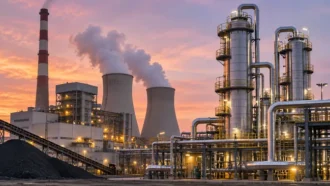
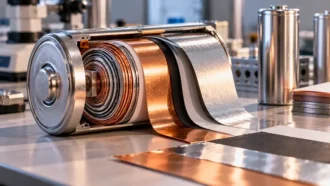
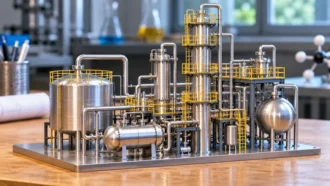
The modern curriculum has expanded well beyond the traditional oil and gas refineries. Today, chemical engineers are at the forefront of the green energy transition, designing battery systems for electric vehicles, capturing carbon dioxide from the atmosphere, and developing biodegradable plastics. Courses now heavily integrate simulation software like Aspen Plus, allowing students to model entire chemical plants virtually. You will learn to conduct Hazard and Operability Studies (HAZOP) to identify risks before they happen. Whether you are fermenting vaccines in a bioreactor or distilling fresh water from the ocean, the core skill of optimizing complex processes remains the defining characteristic of the chemical engineer.
Who Should Enroll?
- Chemistry Graduates: Scientists looking to bridge the gap into engineering to work on industrial-scale production rather than just research.
- Process Technicians: Operators seeking to understand the theoretical principles behind the equipment they run daily to advance their careers.
- Manufacturing Engineers: Professionals in food, pharma, or materials sectors who need to optimize production lines for efficiency and safety.
- Environmental Engineers: Experts focusing on waste treatment and pollution control processes that rely heavily on chemical separation techniques.
Enroll in a Chemical Engineering course today to master the molecular machinery of the material world and engineer solutions for a sustainable future.
Showing 1–12 of 15 resultsSorted by latest




Frequently Asked Questions about Chemical Engineering Courses
1. What is the difference between Chemistry and Chemical Engineering?
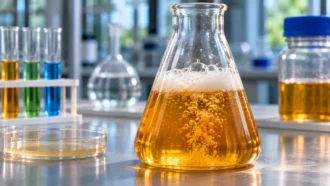
Chemistry focuses on the discovery and study of reactions on a small scale, usually in a laboratory beaker. Chemical Engineering focuses on the design and operation of industrial plants to manufacture those chemicals at scale. Chemists ask “what happens?” while Chemical Engineers ask “how can we make this profitable and safe?”
2. Do I need to be good at chemistry to be a Chemical Engineer?
You need a solid understanding of general and organic chemistry, but you do not need to be a chemistry expert. Chemical Engineering is actually more focused on physics and math—specifically thermodynamics, fluid dynamics, and heat transfer. You spend more time calculating flow rates and energy efficiency than memorizing periodic table trends.
3. What software is standard in this industry?
You will learn process simulation software like Aspen Plus, HYSYS, or ChemCAD. These tools allow you to model chemical plants digitally to predict how they will behave under different conditions. Proficiency in these tools is a major hiring requirement for process design roles.
4. Is Chemical Engineering only about Oil and Gas?
No, while the petrochemical industry is a large employer, it is far from the only one. Chemical engineers are critical in pharmaceuticals (making drugs), food and beverage (processing food), semiconductor manufacturing (etching chips), and renewable energy (biofuels and batteries). The skills are transferable to any industry that processes matter.
5. How much math is involved?
Chemical Engineering is arguably one of the most math-intensive engineering disciplines. You will use differential equations to model reaction rates and calculus to solve thermodynamics problems. However, in practice, computer software handles the complex solving; your job is to set up the problem correctly and interpret the results.
6. What is “Process Safety”?
Process Safety involves preventing fires, explosions, and toxic releases in chemical facilities. It is different from personal safety (like wearing a hard hat). Courses teach you methodologies like HAZOP (Hazard and Operability Analysis) and LOPA (Layer of Protection Analysis) to systematically identify and mitigate risks in a plant design.
7. What is “Mass Transfer”?
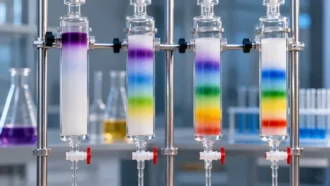
Mass Transfer is the movement of mass from one location to another, which is fundamental to separation processes like distillation, absorption, and extraction. You learn how to design towers and columns that separate a mixture into its pure components (e.g., separating alcohol from water or gasoline from crude oil).
8. Can I work in the pharmaceutical industry?
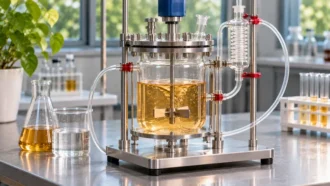
Yes, the pharmaceutical industry is a huge growth area for chemical engineers, often referred to as “Bioprocess Engineering.” In this role, you design the bioreactors and filtration systems used to mass-produce vaccines and medicines. The principles are the same as traditional chemical plants, but with stricter sterility and regulatory requirements.
9. What is “Transport Phenomena”?
Transport Phenomena is a unified subject that combines fluid mechanics (momentum transfer), heat transfer, and mass transfer. It is the theoretical heart of the discipline. Understanding how these three things move and interact allows you to model almost any physical process in the universe.
10. How does sustainability fit into the curriculum?
Sustainability is central to modern Chemical Engineering. You will learn about “Green Chemistry” principles, which aim to reduce hazardous byproducts. Courses cover carbon capture technologies, water recycling, and the design of energy-efficient processes to minimize the environmental footprint of heavy industry.